

Blogs
ــــــــــــ
Car Shipping Methods – What is the Best?
Shipping a car is a service of great responsibility. If you plan to transport a vehicle overseas, you need to find the best and safest transportation option to do that. There are three ways of shipping cars internationally: by air freight, RoRo, or in containers. This post intends to discuss the benefits of each one of them so you can analyze what kind of shipping is appropriate for you.
Air Freight
Although air freight is considered the most expensive way to ship your vehicle, it is also the quickest. The transit time for this type of shipping is much shorter compared to RoRo and container shipping. GCE can arrange to place your car on the next flight available to its destination
Our reliable agents are ready to take care of all the movement processes, offering different solutions depending on your needs.
RoRo
Roll-on Roll-off is the cheapest method of shipping cars. It consists of driving the vehicles inside large shipping vessels for transport overseas. This option services individuals or corporations who wish to transport single or multiple vehicles.
Because of its cost efficiency, RoRo is very popular between exporters and importers. However, unlike airfreight, its geographical coverage is less extensive, as it can only be arranged from major ports. RoRo car shipping also requires additional services depending on where your vehicle is leaving from and where its final destination will be.
It’s important to remind you that to ship by RoRo, your vehicle needs to be in working condition for this kind of freight. Some ocean carrier lines will accept non-running vehicles upon the payment of additional fees.
Containers
Car shipping in containers is the safest and most reliable shipping method. With this method, you can ship your car in a sole-use container or a consolidated container loaded with multiple vehicles going to the same destination.
The consolidated container option is the cheapest because it allows customers to share the cost of ocean freight, customs clearance, and port charges with other individuals. However, shipping on a single container is faster because there is no need to wait for other vehicles to fill the container before departure.
This kind of freight requires you to deliver your vehicle to the shipping company’s warehouse before the departure date. GCE customers can benefit from a free storage period using our warehouse facility and our 3rd party network terminals that cover all the main ports in the US.
GCE has the best freight solutions for your specific car shipping needs.
Explore further :
What is The Importance of IOR and EOR?
IOR/EOR ensures faster, simpler, and more reliable importing/exporting worldwide. These specialized services act as your trusted partners, handling the intricacies of cross-border trade on your behalf. By understanding the crucial roles of IOR and EOR, businesses can streamline their operations, mitigate risks, and focus on core competencies.
Let’s explore how these services can be a game-changer for your global trade endeavors.
What are IOR/EOR Roles?
To manage and supervise import and export operations, IOR and EOR include some direct roles such as:
- Classification and valuation of the merchandise before the import.
- Overall review of the export processes.
- Compliance with the destination/source country regulations.
- Paying all the taxes upon an international trade.
- Presenting the specific declarations to government agencies.
- Prepared all the required documentation (certifications, permits, and authorizations)
Learn More about
Importer Of Record and Exporter Of Record Importance
To import and export any goods, it’s necessary to have an established business or a legal entity in the destination or source country. IOR/EOR can assume this role by taking responsibility for import/export processes and all subsequent taxes until the delivery is fulfilled. They are officially recognized by the governments as part of a shipment transaction.
Importer and Exporter of Record ensure compliance with all necessary regulations and statutes to deal with a new country. These services also enable customers to export warranty or replacement stock to other countries. With an extensive freight network worldwide, GCE Logistics can easily provide all these IOR/EOR assignments. Explore our Importer of Record Service
The Risk of International Expansion
The risks faced when engaging in international expansion
When planning to expand a business into new markets, it’s normal to come across some risks that may prevent our companies from actively developing new opportunities in foreign areas. For that reason, it’s important to analyze all the implications of international business development and then find the best solutions to favor this process.
But what are the risks? And what are the essential questions you must ask before planning an international expansion? Check below:
- Risk of increasing the costs: The expansion costs will be offset by your business’s foreign actuation? Is the outlay and the investment worth it?
- Risk of regulatory obligations: Which regulations and requirements your company must comply with to grow its presence in foreign markets?
- Risk of unknown tariffs and licenses: Which documentation does your company need to obtain when acting internationally? And what are the duties and taxes involved in the process?
- Risk of unknown import/export processes: Which processes your company will be responsible for? How should my company plan and develop all import/export processes?
- Risk of increasing the staff: Should the company enlarge its staff? And which training will be necessary to provide to improve international relationships?
- Risk of Socio-political uncertainties: What is the actual social-political scenario and how it can influence your business expansion?
- Risk of reputational changes: How does the presence in foreign markets affect the company’s reputation?
- Risk of compliance on delivery: Will your company be capable of delivering its new and international orders on time?
These questions will help you to identify all the international expansion implications and plan the next steps to reach new markets. To manage those risks, stay informed about the market situation and be both financially and bureaucratically prepared.
Another important move is to search for the right partners that may favor or facilitate your foreign actions. GCE Logistics can be a reliable option in this case. GCE has a solid financial position, an experienced staff, and great distribution channels to optimize your global transactions and minimize the risks already mentioned. The company is also concerned with identifying the most appropriate customs regime to support your business strategy.
With more than 20 years of experience, GCE has sufficient know-how and quality to be recognized as the most successful logistics company in the Middle East. So if your business is willing to engage in this region, you may count on GCE Logistics services.
Explore related topics and gain valuable insights from these articles:

IOR and EOR in The Middle East
Navigating the complexities of the Middle Eastern market can be challenging for businesses involved in international trade. Understanding the roles of Importers of Record (IORs) and Exporters of Record (EORs) is crucial for ensuring smooth customs clearance and compliance with local regulations.
In this guide, We’ll break down these essential roles and explore how they can streamline your operations in the region.
Importer of Record IOR in The Middle East
So, you want to bring your products to the Middle East? Great idea! But let’s be real, dealing with customs and regulations in a new market can be a real headache. That’s where an Importer of Record (IOR) comes in to save the day.
Think of an IOR as your local expert who knows all the ins and outs of importing goods. They take on the legal responsibility for bringing your stuff into the country, ensuring everything’s in order with customs, and paying all the necessary fees. It’s like having a personal assistant for your imports!
To give you a better idea, let’s talk about Saudi Arabia. Importing goods into the Kingdom has its own set of rules. An IOR in Saudi Arabia would handle everything from preparing the correct paperwork to ensuring your shipment clears customs smoothly. They’re familiar with Saudi customs regulations and can help you avoid any potential delays or issues.
An IOR takes the stress out of importing, so you can focus on growing your business.
Exporter of Record EOR in The Middle East
So, you’re ready to take your products to the world, and the Middle East is on your list? Awesome! But let’s be real, exporting can be a complex process with a ton of paperwork and regulations. That’s where an Exporter of Record (EOR) comes in handy.
Think of an EOR as your shipping superhero. They take on the legal responsibility for getting your goods out of the country, ensuring everything complies with export rules, and handling all the necessary paperwork. It’s like having a personal export assistant!
For example, if you’re exporting from Saudi Arabia, an EOR would be your go-to person for navigating the Kingdom’s export regulations. They’ll make sure your products are cleared for export, handle all the customs documentation, and generally take the hassle out of shipping.
An EOR ensures your exports go smoothly, so you can focus on growing your business.
As an experienced IOR/EOR service provider, we streamline your import/export processes, ensuring compliance and efficiency. Let us handle the complexities while you focus on growth.
Contact us today to learn how we can be your trusted partner in the Middle East.
Deepen your knowledge through Reading More Related Articles:
Car Shipping Care – Safety and Security Tips
Prepare Your Car For Shipping
Whenever we talk about freight it’s essential to point out that all delivery needs special care. Today, let’s talk about Car Shipping’s cares
Consider this type of transport carefully to ensure a safe and perfect delivery for customers.
- Clean and remove all objects from inside the car, and protect any loose items on your dashboard to prevent damage during transport.
- An interesting tip to check your vehicle at the time of delivery is to take pictures of all sides so that you can compare the state in output and arrival of the product.
- Sports cars and race cars are generally lower than conventional models, that way, it’s interesting to measure the distance of the front and rear bumpers to the ground, and later check if there was any damage.
- All care is essential to the loading and unloading of vehicles and the automobile’s owner can assist with this work, by removing the front bumper, raising the ride height via the adjustable suspension, and stiffening the shock dampening whenever possible.
GCE specializes in international car shipping services to and from the Middle East.
Explore related topics and gain valuable insights in Vehicle Shipping:
Daily Car Care Tips
Today, let’s take more suggestions for car care that may be useful daily.
People may think that keeping a car always clean is a matter of vanity, but what many people don’t know is that this care adds value to the car, keeps the paint, and avoids damage. Experts say that prevention can take more work, but the long-term is economically better than having to make repairs!
Car Maintenance and Care Tips
Check out some points of attention to keep your car always looking like new:
Bodywork:
To protect the bodywork of your car, always keep it protected from sunlight and rain. The sun attacks the varnish ink and can leave the whitish surface.
At night leaving the car in the serene can also damage the paint, because the serene is acidic, and loaded with pollution, especially in large cities.
Cars are exposed to climate conditions and usually, have the paint worn faster. It’s advisable to leave the car always in a closed place to prevent damage.
A custom of many car lovers is to protect them with covers, which also is not very advised by experts in the field. The covers act as greenhouses and preclude “breathing”, aggravating the exposure effect of the car in the sun, worsening the conditions of the bodywork. Ideally, when using a protection like this, choose the thermal model. Always consult a specialist before buying a protective cover.
Car Wash:
It’s very important to keep a well-maintained car, especially the antiques, using specialized products for automotive cleaning. Using cosmetics is never recommended.
Wash the car always in the shade, remove the product completely, and then dry it. It’s ideal to use a cotton cloth to prevent scratches and damage to the bodywork.
Leather Seats:
The interior of cars also requires constant care and the leather seats require special care, mainly lighter colors. To clean this type of material, only a wet cloth may damage it. It’s best to use specialized products for leather cleaning.
These are just a few tips of care we must have constantly with our cars. Nowadays, many people have this object as one of the largest personal property and, thus, is very important to keep it always maintained.
GCE is a company specializing in international car shipping, and we love to talk about it! To know more about us, contact us here.
Explore related topics and gain valuable insights in Vehicles:
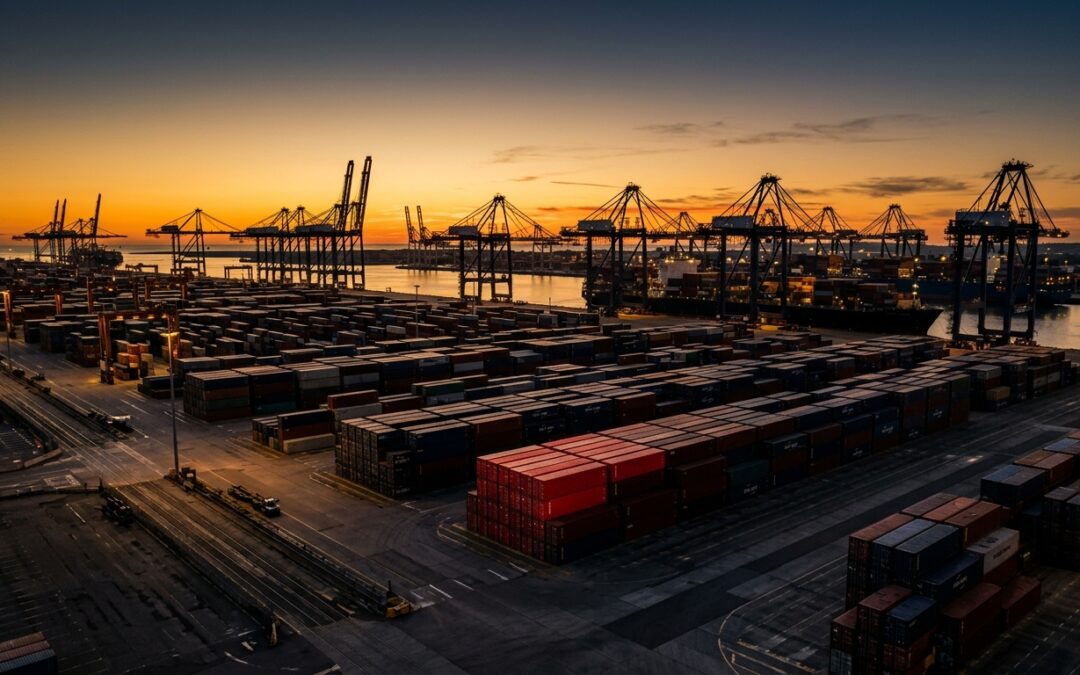
Advantages of Sea Freight: 8 Benefits for International Shipping
1. The Cost Equation That Favours Volume
2. Built for Cargo Other Modes Cannot Touch
- Bulk commodities such as grain, coal, ore, and cement
- Industrial machinery and heavy equipment
- Vehicles and automotive parts, including via car shipping methods
- Oversized and project cargo
- Raw materials such as steel, timber, and chemicals
- Containerized consumer goods across every type of shipping container
3. Flexible by Design: FCL, LCL, and Specialized Loads
Few modes flex around shipment size the way ocean freight does, which is what makes it workable for both multinationals and small e-commerce sellers.
- FCL (Full Container Load): one shipper books the entire container, ideal for volumes above roughly 15 CBM.
- LCL (Less than Container Load): several shippers share one container, which suits smaller and e-commerce volumes. See LCL shipping explained for the mechanics.
- NOR (Non-Operating Reefer): a refrigerated container used dry at a discount, often on return legs.
Beyond standard boxes, reefer, RoRo, and breakbulk options cover cargo that will not fit a conventional container.
4. The Lowest Carbon Footprint per Ton-Mile
Ocean shipping produces the lowest CO₂ emissions per ton-mile of any freight mode, a fact that carries growing weight in procurement decisions. UK government (Defra) figures illustrate the gap clearly: moving 2 tonnes 5,000 km by small container ship emits about 150 kg CO₂e, against roughly 6,605 kg CO₂e for the same load by plane. The industry is pushing that figure lower still through cleaner fuels such as LNG and alternative bunker options.
5. A Secure Way to Move Goods Across Oceans
6. A Network That Reaches Almost Every Market
7. Fewer Touchpoints, Lower Damage Risk
8. Specialized Equipment for Perishables and Project Cargo
Modern ocean freight goes well beyond the dry container. Specialized equipment opens the door to cargo that needs specific conditions or shapes:
- Reefer containers for temperature-sensitive pharma, food, and flowers
- RoRo (Roll-On/Roll-Off) for vehicles and rolling machinery
- Breakbulk for oversized cargo that will not fit a container
- Tankers for liquid bulk
Hazardous loads across all of these follow IMDG Code compliance, and accurate freight documentation keeps specialized shipments moving without clearance delays.
Sea, Air, or Road? A Side-by-Side Comparison
Use this table to compare sea freight against the alternatives for your shipment type.
| Factor | Sea Freight | Air Freight | Road Freight |
|---|---|---|---|
| Cost (long-haul) | Lowest | Highest | Medium |
| Transit speed | Slowest (weeks) | Fastest (days) | Medium (days) |
| Capacity | Highest | Limited | Medium |
| CO₂ per ton-mile | Lowest | Highest | Medium |
| Best for | Bulk, heavy, non-urgent | Time-sensitive, high-value | Regional, cross-border |
Need a faster lane for part of your cargo?
Compare it against our →
Compare Your Options with GCE →
When Sea Freight Is the Wrong Call
Sea freight is not always the right choice. It is worth weighing the alternatives when:
Time is critical
Sea freight takes weeks; air freight takes days
The shipment is small
For sub-100 kg loads, air freight can work out cheaper per kg.
Cargo is high-value and lightweight.
The speed and insurance profile of air often justify the premium.
Routes face disruption
Plan Your Next Ocean Shipment with GCE
GCE Logistics manages ocean freight end-to-end, covering FCL, LCL, specialized cargo, and customs clearance, with on-ground execution across the EU and Middle East. With 25+ years moving cargo along corridors such as the Netherlands to Jordan and Asia to the EU, our team plans each shipment around your cost, timeline, and compliance needs.
Why is sea freight cheaper than air freight?
How safe is sea freight?
How long does sea freight take?
What are the disadvantages of sea freight?
Is sea freight better than air freight?
How do freight forwarders handle customs clearance?
The Importance Of Having a Car Shipping Insurance
Car shipping insurance is crucial, and today we’re going to explain why.
When a vehicle is shipped we need to avoid any damage that may happen during transport. GCE always takes care to avoid all possible damages and we guarantee it from everything on our side. Unfortunately, accidents can happen during the process. Therefore, it’s important to ensure any load against accidents, theft, and other possible damage that cannot be controlled. A maritime path, for example, can be interfered with climate conditions. By land, accidents may occur, as well as in air transport.
By hiring insurance, the company must be fully transparent with its customers. Clarifying doubts and describing all damage that can be covered by the insurance. it’s essential that the customer can choose one that best suits their needs
The company must draw up a contract with all the conditions provided by the insurance option chosen by the customer, who must receive a copy of the contract signed by both parties.
To avoid problems that insurance can’t cover, it’s advised to the owner of the car to remove all objects that are loose inside it and protect any parts that can come loose or be fragile. By taking these precautions, the owner reduces the risk of damage to the vehicle and other head-each.
GCE guarantees quality, care, and safety in all deliveries. To learn more about car shipping insurance, please contact us.
Questions You Have About Car Shipping
Many questions arise when talking about car shipping routes. When people need to move, buy, or sell a car, it’s common to have doubts about how this vehicle is going to be transported over long distances.
We already know that there is suitable equipment for this kind of transport, and specialized companies in this segment, are responsible for delivering cars worldwide, safely.
GCE specializes in international car shipping to and from the Middle East, providing the most reliable international car shipping services to the region, so we’ll answer some questions about this service.
For Car Shipping by Land Freight
Use stork trucks and truck platforms. The choice depends on the product size, the number of vehicles, and whether it is a delivery or an emergency. The first one, the Stork truck is a two-story truck, which normally holds up to 11 cars. The second, the truck platform, is an open truck, which has a sturdier structure and, besides taking passenger cars, is also used for transporting larger vehicles such as vans and trucks. Your freight forwarder will know which one is better for your needs.
Before starting the transportation it’s necessary to confirm with your freight forwarder the documentation required to move that product, considering that each type of cargo and each location has specific laws and a bureaucracy to follow.
A very recurrent question on car shipping service is about its value. We talked about how some factors can influence the car shipping value. To have an accurate estimate of your car shipping price is important to define all the operation data before the process.
Not only for car shipping but for any type of delivery, care is essential to avoid any damage to the product.
To learn more about car shipping, International car shipping to the Middle East is now much easier with GCE Logistics!
Explore related topics and gain valuable insights in Vehicles:
- Car Shipping Care Tips
- Car Shipping Process
- Car Care and Maintenance Tips
- Car Shipping Guide
- How To Maintain an Old Car?

What is The Responsibilities of Importer of Record?
What is The Importer Of Records Responsible For?
Navigating global logistics can be a real headache, especially when it comes to importing goods. That’s where an Importer of Record (IOR) service can be a lifesaver. If you’re thinking about using an IOR to handle your imports, you might be wondering what they do.
Let’s break down their main responsibilities.
- Acting as the importer for customs purposes during importation
- Supporting registrations in other countries
- Applying for necessary import licenses or permits
- Maintaining records for the minimum duration required by law and as needed by customers
- Preparing Certificates of Origin when required
- Avoiding costly trade compliance penalties
The Responsibilities Of IOR in Shipping
- Ensuring compliance with import regulations in the destination country.
- Paying all applicable taxes, duties, and fees for the imported goods.
- Filing the necessary documentation, permits, and licenses for the goods.
What Do IOR Service Responsible For?
- All Documentation compliance checks, import permits, and licensing
- Shipment status and tracking reports.
- Relevant customs channels for Clear shipments.
- Paying All customs clearance charges on your behalf
- Perform the door-to-door delivery to the end user
- Warehousing and Storage solutions.
Conclusion
An Importer of Record (IOR) is your go-to person for making sure your international shipments go smoothly. They handle all the paperwork, regulations, and customs stuff so you don’t have to. Imagine them as your personal customs agent, making sure everything’s in order and avoiding those nasty penalties.
IORs take care of things like getting the right permits, paying taxes and duties, and keeping track of all the paperwork. Plus, they know all the ins and outs of import rules, so you can relax knowing your shipment is in good hands.
At GCE Logistics, our IOR service covers everything from checking documents to getting your stuff from point A to point B. We even offer storage options.
Want to make your life easier? Contact Us!
Deepen Your knowledge through Reading More Related Articles: