
Blogs
ــــــــــــ
How to Decide If Custom Clearance Should Be Outsourced to IORs
If your business involves imported and exported goods, then there is no way to get around the provisions of customs clearance. You might be able to get your exports cleared on the destination ports of your own country. However, it is one heck of a task to get your things cleared on the overseas ports without the help of experienced Importers of Record (IORs).
Instances When You Should Outsource It
Here, we are going to discuss the cases where you should resort to Importer of Record IOR and Exporter of Record EOR services for customs clearance.
Working with a Few Export/Import Declarations
If you are working with a couple of exports/import declarations, then it won’t be wise to set up an entire in-house department for dealing with customs clearance. Freight forwarders, Importers of Record (IOR), and Exporters of Record (EOR) can be of great assistance when there are limited import and export declarations to deal with.
If You Are Offered a Collect Offer
Many IORs and EORs put forward collect offers on a particular number of line items and import/export declarations. If that number matches with what you are operating with, then you should go to a professional Importer or Exporter of Record.
When You Can Take Care of Customs Clearance on Your Own
For handling numerous import/export declarations, consider setting up an in-house team. Nonetheless, it’s wise to conduct a cost analysis of cargo handling first.
You can handle customs clearance yourself if shipping to countries with free clearance systems.
Advantages of Outsourcing Your Customs Clearance to EORs and IORs
There are multiple benefits of outsourcing your customs clearance to EORs and IORs.
- Dealing with imported and exported goods might not be your business’s core competency. You might experience administrative overburden by dealing with cargo clearance on your own. You can protect your business from that unnecessary and unproductive work by availing the services of EORs and IORs.
- Customs laws are ever-changing provisions. A business can’t track global customs law updates without relevant professionals.
It’s not necessary to have the same customs clearance approach all the time. Keep in mind the overall profitability and administrative load while deciding what clearance option will turn out best for you. We can help you with this part, if you are interested, please click here to learn more.
The New Incoterms 2020
At a Glance
11 rules │ 7 any-mode + 4 sea-only │ Current since 1 Jan 2020 │ No Incoterms 2023 or 2025 │ Next revision ~2030
Incoterms 2020 are the 11 international trade rules published by the International Chamber of Commerce (ICC) that define the responsibilities of buyers and sellers in international shipping contracts. They took effect on 1 January 2020 and remain the current version: there is no Incoterms 2023 or Incoterms 2025. Each rule sets out who pays for transport, where risk passes, who handles customs, and who arranges insurance. This guide covers all 11 rules, the key changes from 2010, and the comparisons that cause the most confusion.
What Are Incoterms?
Incoterms, short for International Commercial Terms, are a standardized set of rules published by the International Chamber of Commerce (ICC) since 1936. They appear in international sales contracts to assign specific responsibilities between buyer and seller, and the ICC revises them roughly every ten years. Importantly, Incoterms are not laws; they are voluntary contractual frameworks adopted globally. For the underlying vocabulary, see the language of Incoterms. In practice, Incoterms define:
- Who pays for transport at each stage of the journey
- Where risk transfers from seller to buyer
- Who is responsible for import and export customs formalities
- Who is responsible for insurance, according to certain rules only
Is Incoterms 2020 Still Valid? (There Is No 2023 or 2025)
Yes. Incoterms 2020 is the current version and remains in force. There are no Incoterms 2023 and no Incoterms 2025, despite frequent searches for both.
The ICC updates Incoterms approximately every decade. Past editions appeared in 1936, 1953, 1967, 1976, 1980, 1990, 2000, 2010, and 2020, and the next revision is expected around 2030. Older versions such as Incoterms 2010 can still be used in a contract if they are explicitly referenced, which is exactly why the version must always be named. When drafting a contract, state it in full, for example “FCA Rotterdam (Incoterms 2020)”.
The 11 Incoterms 2020 Rules: The Full List
The 11 Incoterms 2020 rules are divided into two categories by transport mode.
Any mode of transport (7 rules):
| Code | Full Name | Transport Mode | Key Feature |
|---|---|---|---|
| EXW | Ex Works | Any mode | Minimum seller obligation |
| FCA | Free Carrier | Any mode | Best for containers |
| CPT | Carriage Paid To | Any mode | Seller pays carriage |
| CIP | Carriage and Insurance Paid To | Any mode | Seller insures (Clauses A) |
| DAP | Delivered at Place | Any mode | Seller delivers, not unloaded |
| DPU | Delivered at Place Unloaded | Any mode | Seller unloads at destination |
| DDP | Delivered Duty Paid | Any mode | Maximum seller obligation |
| FAS | Free Alongside Ship | Sea/inland | Delivered next to the vessel |
| FOB | Free On Board | Sea/inland | Risk passes on board |
| CFR | Cost and Freight | Sea/inland | Seller pays freight, not insurance |
| CIF | Cost, Insurance and Freight | Sea/inland | Seller insures (Clauses C) |
What Changed Between Incoterms 2010 and 2020
Incoterms 2020 introduced five substantive changes from the 2010 edition:
- DAT became DPU. Delivered at Terminal was renamed Delivered at Place Unloaded, broadening the rule beyond terminals to any unloaded destination point.
- CIP insurance was raised. Minimum cover was upgraded to Institute Cargo Clauses (A), the most comprehensive level, while CIF retained the lower Clauses (C).
- FCA gained an on-board bill-of-lading option. Sellers can now have the carrier issue an on-board bill of lading after loading, which buyers can present to banks under letter-of-credit terms.
- Carriage by one’s own means is recognized. FCA, DAP, DPU, and DDP now explicitly allow the seller or buyer to use their own vehicles rather than a third-party carrier.
- Security obligations were added. Security-related requirements, such as ISPS screening, are now explicitly assigned within carriage cost and obligation provisions.
The 11 Rules Explained, One by One
Each rule below follows the same pattern: what it means, where risk transfers, and where cost transfers.
| Incoterm | Risk Transfer | Cost Transfer | Same Point? |
|---|---|---|---|
| EXW | Seller’s premises | Seller’s premises | Yes |
| FCA | Named place | Named place | Yes |
| FOB | On board vessel | On board vessel | Yes |
| CFR | On board vessel | Destination port | No |
| CIF | On board vessel | Destination port | No |
| CPT | First carrier | Destination | No |
| CIP | First carrier | Destination | No |
| DAP / DPU / DDP | Named destination | Named destination | Yes |
Comparing the Major Rules: FOB vs DDP, FCA vs FOB, CIF vs CIP
Three comparisons account for most Incoterms confusion. Use them to find the rule that fits your shipment.
FOB vs DDP
FOB puts the buyer in charge of ocean transit and import customs, while DDP shipping puts the seller fully in charge through to destination. FOB suits experienced buyers with strong destination logistics; DDP suits buyers entering new markets or without local entities. Under DDP, the seller pays the tariffs, and the most common pitfall is a seller without local IOR registration facing customs blocks.
FCA vs FOB
Both transfer risk early, but FCA works for any transport mode, while FOB applies only to sea and inland waterway. FCA also handles containerized cargo more practically, so most modern container shipments should use FCA rather than FOB.
CIF vs CIP
Both require the seller to arrange insurance, but CIP now requires the highest level of cover (Institute Cargo Clauses A), while CIF still requires only the minimum (Institute Cargo Clauses C). CIP applies to any mode of transport; CIF applies only to sea and inland waterway transport.
How Incoterms 2020 Decide Who Handles Customs and Acts as IOR
The Incoterm chosen determines which party acts as Importer of Record (IOR) and pays import duties:
- Seller-led (DDP). The seller, or an appointed IOR service, registers as Importer of Record and pays import duties at destination. This matters most for foreign sellers shipping to the US, the EU, or the Middle East.
- Buyer-led (EXW, FCA, FOB, CIF). The buyer is the IOR and handles the import customs declaration and duties.
- Hybrid (DAP, DPU). The seller arranges transport to the destination, but the buyer remains the IOR. Mismatching the Incoterm with IOR responsibility is one of the most common causes of customs holds.
What Incoterms 2020 Do Not Cover, and How to Use Them in Contracts
Incoterms 2020 are powerful, but they do not cover everything in a sales contract. They leave out:
- Transfer of title or ownership of the goods
- The price of the goods or the payment terms
- What happens if a party fails to perform
- Intellectual property rights
When using Incoterms in contracts, follow these practices:
- Name the specific version, for example “FCA Rotterdam (Incoterms 2020)”
- Specify the named place precisely, whether a port, terminal, or full address
- Align the Incoterm with your insurance, IOR setup, and customs strategy before signing, alongside the right freight documents
- Train procurement and finance teams, since the wrong Incoterm can shift cost by 3% to 15% of shipment value
Shipping Under Incoterms 2020? GCE Can Help
GCE Logistics manages international shipments under all major Incoterms 2020, including full IOR and customs compliance for DDP, as well as freight forwarding under FOB, CIF, and FCA. With 25+ years on EU and Middle East trade lanes, our team helps you match the right term to your customs and insurance strategy before you sign.
Frequently Asked Questions
Is Incoterms 2020 still valid?
Yes. Incoterms 2020 is the current version published by the ICC. There is no Incoterms 2023 or Incoterms 2025. The ICC revises Incoterms roughly every ten years, and the next version is expected around 2030.
How many Incoterms are there in 2020?
There are 11 Incoterms 2020 rules. Seven apply to any mode of transport (EXW, FCA, CPT, CIP, DAP, DPU, DDP), and four apply only to sea and inland waterway transport (FAS, FOB, CFR, CIF).
Is FOB or DDP better?
Neither is universally better. FOB suits experienced buyers with strong destination logistics, while DDP suits buyers entering new markets or without local IOR capability, since the seller handles everything including duties.
Who pays tariffs under DDP?
The seller pays all tariffs, import duties, and applicable taxes under DDP. The seller, or an appointed IOR service, must be registered with the destination country’s customs authority, and these customs responsibilities sit with whoever is the IOR.
What is the difference between Incoterms 2020 and 2010?
There are five key changes: DAT was renamed DPU, CIP insurance cover was raised to the higher minimum, FCA now allows an on-board bill of lading provision, carriage with own means is now permitted under FCA, DAP, DPU, and DDP, and security obligations are explicitly assigned.
What is the difference between FCA and FOB?
FCA applies to any transport mode and any place of delivery, while FOB applies only to sea and inland waterway transport at the port of loading. Containerised cargo should generally use FCA rather than FOB.
What do Incoterms 2020 not cover?
Incoterms 2020 do not cover transfer of title or ownership, the price of the goods, payment terms, breach of contract remedies, or intellectual property rights. These must be addressed separately in the sales contract.
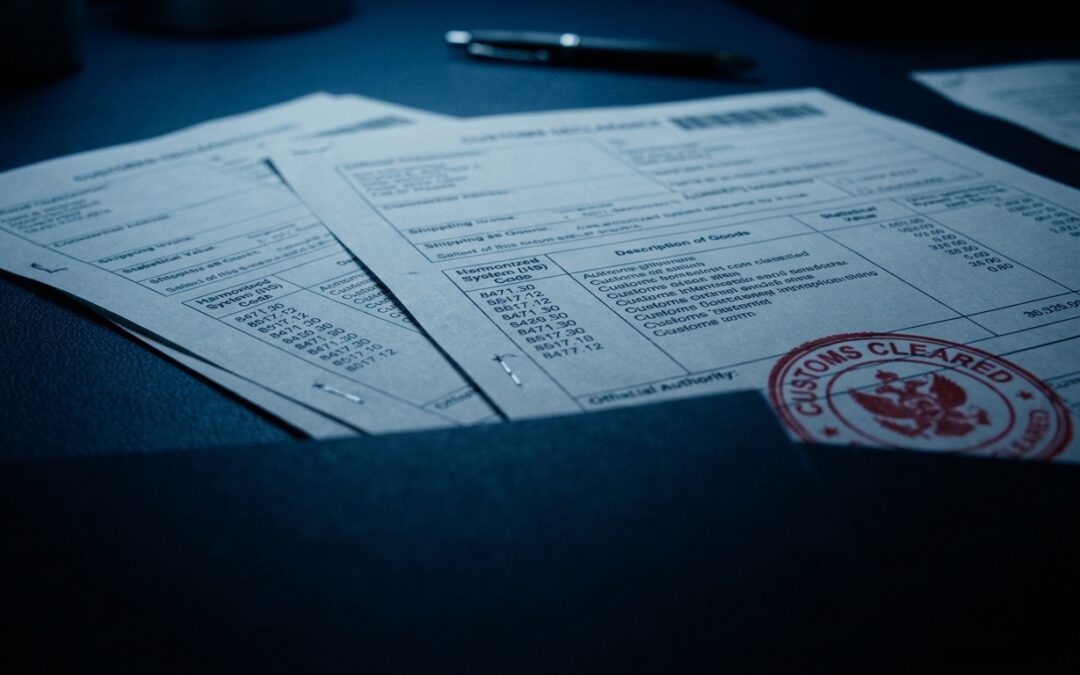
Outsourcing Customs Clearance With IORs and EORs
If your business involves imported and exported goods, then there is no way to get around the provisions of customs clearance. You might be able to get your exports cleared on the destination ports of your own country. However, it is one heck of a task to get your things cleared on the overseas ports without the help of experienced Importers of Record (IOR).
In this topic of customs clearance for IOR/EOR we will help you in:
- How to Decide If Customs Clearance Should Be Outsourced to Importer of Record IORs / Exporter of Record EORs? Especially for IT Hardware Products such as Routers, Access Points, Servers, RAMs, Flash Storage, Hard Disks, etc..
- And Why You Should hire Importer of Record IORs / Exporter of Record EORs for Customs Clearance?
- And When to take care of Customs Clearance on your own?
When to Outsource Customs Clearance to IORs or EORs?
Here, we’ll discuss when to use Importer of Record (IOR) and Exporter of Record (EOR) services for customs clearance. Read more about The Advantages of Customs Clearance Services
1. Working With a Few Export/Import Declarations
If you have only a few import/export declarations, setting up an in-house customs department isn’t practical. Freight forwarders, Importers of Record (IOR), and Exporters of Record (EOR) can efficiently handle limited customs clearance tasks.
2. If You Are Offered a Collect Offer
Many Importers of Records IORs and Exporters of Records EORs put forward collect offers on a particular number of line items and import/export declarations. If that number matches with what you are operating with, then you should go to a professional Importer or Exporter of Record.
When You Can Take Care of Customs Clearance on Your Own?
For handling a large volume of import/export declarations, setting up an in-house team may be beneficial. However, conducting a cost analysis of cargo handling beforehand is still advisable.
You can also go for customs clearance on your own if you are shipping to countries that offer free customs clearance systems.
Benefits of Outsourcing Customs Clearance
There are multiple benefits of outsourcing your customs clearance to EORs and IORs.
- Dealing with imported and exported goods might not be your business’s core competency. You might experience administrative overburden by dealing with cargo clearance on your own. You can protect your business from that unnecessary and unproductive work by availing the services of Importer of Record IORs and Exporter of Record EORs.
- Customs laws are ever-changing provisions. A business can’t keep tabs on all the updates happening in custom laws all around the world if it doesn’t have relevant professionals.
It’s not necessary to have the same customs clearance IOR approach all the time. Keep in mind the overall profitability and administrative load while deciding what clearance option will turn out best for you.
Deepen Your Knowledge and Read:
CBP Tips for New Importers of Records (IORs) in The US
US Customs CBP Tips For New IORs
If you are new to the game of imports and exports, then things can get quite difficult in the beginning. As an Importer of Record (IOR), you need to be aware of numerous details.
The U.S. Customs and Border Protection (CBP) regulates import and export activity at U.S. ports. They offer suggestions to help new Importers of Record (IORs) enter the industry. Let’s review these CBP Tips.
US Importer Of Record Requirements
1. The Importance of Licensing and Permits for IORs
Many people start working as Importers of Record (IORs) under the impression that they don’t need any license at all. This impression has primarily been built because CBP doesn’t require Importer of Record (IORs) to possess any permit or license.
Sometimes, an importer may need a permit from another government body to clear their shipment through customs. For that matter, CBP officials always advise every importer of record (IOR) new in the industry to work with other relevant government regulators.
2. Building a Strong Relationship with US Customs
To streamline shipment movement through ports, contact customs officials at the entry point of your shipment. For IORs managing multiple ports, consult a CBP import specialist for your items. Addressing details with CBP in advance can reduce clearance wait times.
3. Essential Information for Smooth Customs Clearance
It would help if you were extremely clear with customs officials to make sure things continue to sail smoothly. These are some things that should always be part of the information you are going to share with CBP.
- The country of origin (of both merchandise and manufacturer).
- What merchandise is composed of?
- The predetermined use and consumption of the items.
- All the pricing and payment information.
If you don’t want to deal with CBP regulations alone, Get in Touch with your seasoned Importers of Records (IORs) Service Providers, and we can deal on your behalf.
Deepen Your knowledge and read The Role of CBP Importer of Record (IOR) and learn more about The IOR Responsibilities.
Uncover more about the benefits of IOR in the USA
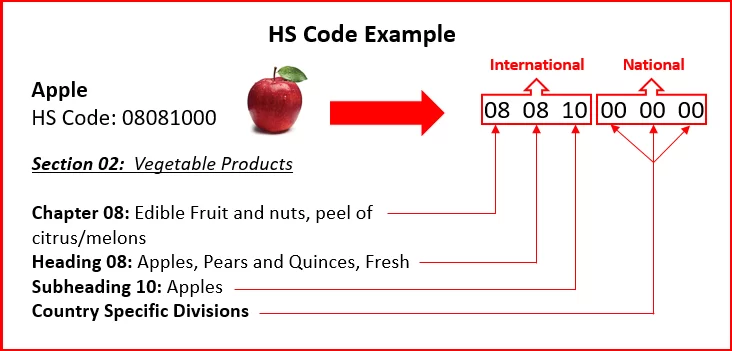
What is HS Code?
What is HS Code? Definition of Harmonized System Code
HS Code, or the Harmonized Commodity Description and Coding System — also known as the Harmonized System (HS) — is the international standardized system of product names and numbers used to classify traded goods.
HS Code Definition according to WCO:
The Harmonized Commodity Description and Coding System, generally referred to as the “Harmonized System” or simply “HS,” is a multipurpose international product nomenclature developed by the World Customs Organization (WCO).
HS comprises about 5,000 commodity groups, each identified by a six-digit code, arranged in a legal and logical structure, and supported by well-defined rules to achieve uniform classification. This system is used by more than 200 countries and economies as a basis for their customs tariffs and for the collection of international trade statistics. Over 98% of the merchandise in international trade is classified in terms of the HS.
How is an HS Code Structured?
Every HS code follows the same structure. The first six digits are internationally standardized. Countries then add their own digits (typically 2–4 more) for national tariff and statistical purposes.
Example code: 8471.30.00.10
| Digits | Segment | What it means |
|---|---|---|
| 84 | Chapter | Nuclear reactors, boilers, machinery & mechanical appliances |
| 71 | Heading | Automatic data processing machines (computers) |
| .30 | Subheading | Portable machines ≤ 10kg (laptops, tablets) |
| .00.10 | National digits | Country-specific tariff & statistical breakdown |
The first 6 digits (847130) are the same in every country. The remaining digits vary by jurisdiction — the EU uses 8 digits (CN), the US uses 10 digits (HTS), the UK uses 10 digits, and Gulf countries (GCC) use 8 digits.
Real HS Code Examples
Example 1 — Laptop Computer
| HS Code | 8471.30 |
| Chapter | 84 — Machinery and mechanical appliances |
| Heading | 8471 — Automatic data-processing machines |
| Subheading | 8471.30 — Portable, weight ≤ 10 kg |
| Used for | Laptops, notebooks, tablets with keyboards |
Example 2 — Industrial Router / Network Switch
| HS Code | 8517.62 |
| Chapter | 85 — Electrical machinery and equipment |
| Heading | 8517 — Telephone sets; apparatus for transmission |
| Subheading | 8517.62 — Machines for reception, conversion, and transmission |
| Used for | Routers, switches, and network hubs |
Example 3 — Medical Face Masks
| HS Code | 6307.90 |
| Chapter | 63 — Other made-up textile articles |
| Heading | 6307 — Other made-up articles |
| Subheading | 6307.90 — Other (includes face masks) |
| Used for | Surgical and protective face masks |
HS Code History
Due to the lack of uniformity between the many different classification systems around the globe, the fragmentation has become a major concern for international trade. Several attempts were made to create a unified international classification system. In 1988, most World Customs Organization (WCO) members adopted the new Harmonized System, which came into effect immediately.
After WCO adoption, the HS became the backbone of global trade compliance. Understanding why the Harmonized Tariff Schedule matters for importers is essential for any business shipping goods across borders.
What are the applications of HS Codes?
HS codes are used by customs authorities, statistical agencies, market research agencies, and government bodies worldwide. They are central to Importer of Record services that handle HS code classification and the monitoring and control of imported and exported commodities through:
- Transport tariffs and statistics
- Collection of internal taxes
- Monitoring of controlled goods
- Customs tariffs
- Collection of international trade statistics
- Import and export monitoring by customs and statistical authorities
- Rules of the country of origin
- Trade negotiations
- Risk assessment and customs compliance obligations for importers shipping IT equipment
- Many companies also use HS codes to calculate the total landed cost of imported products, as well as to identify selling and sourcing opportunities.
How to Find & Look Up Your HS Code — Complete Guide
Finding the right HS code is not guesswork — it follows a structured process. Incorrect classification is one of the most common causes of customs delays, duty overcharges, and compliance penalties. Use the methods and steps below to get it right the first time.
Method 1 — Use an official online lookup tool.
These are the most direct starting points:
- WCO HS Online — browse the full international HS nomenclature
- US Census Commodity Classifier — for US HTS codes (10 digits)
- UK Trade Tariff — for UK commodity codes
- EU TARIC — for EU CN codes
- GCC Customs Portal — for UAE and Gulf imports
Method 2 — Search by product keyword
Enter a plain-language product description into the lookup tool. Start broad (e.g., “router”), then narrow using the subheading descriptions. Always read the chapter and section notes — they are legally binding and can override what the heading text seems to say.
Method 3 — Check existing shipment documents.
If you have previously shipped the same product, the HS code will appear on past commercial invoices, customs entries, or certificates of origin. Verify the code is still current — the WCO updates the HS every five years (last update: 2022, next: 2027).
Method 4 — Request a Binding Tariff Information (BTI) ruling.
For high-value or high-volume shipments, apply for a BTI from your country’s customs authority. A BTI is a legally binding written decision on the correct HS code for your specific product. It protects you from reclassification and gives certainty for duty calculation. Processing takes 30–90 days, depending on jurisdiction.
Method 5 — Work with an IOR or freight forwarder.
For complex goods — especially IT equipment, telecoms hardware, pharmaceuticals, or dual-use items — classification should be handled by a specialist. Freight forwarding services that ensure correct HS code filing and Importer of Record services that handle HS code classification carry the compliance responsibility, so misclassification risk does not sit with you.
Common mistake: Many shippers copy HS codes from supplier invoices without verifying them. The supplier’s code may be correct for their country of export but wrong for your country of import — the national digits differ, and sometimes the subheading itself changes by jurisdiction.
Once you have a candidate code, verify it in 7 steps:
Step 1 — Describe your product precisely.
Write out the full product description — what it is made of, what it does, how it is used, and whether it is for commercial or personal use. Vague descriptions like “electronic device” are not sufficient.
Step 2 — Identify the chapter.
The WCO HS is divided into 21 sections and 99 chapters. Start broad — is your product a machine (Ch. 84–85), a textile (Ch. 50–63), a chemical (Ch. 28–38)?
Step 3 — Narrow to the heading (4 digits).
Within your chapter, find the heading that most specifically describes your product. Read the section and chapter notes — these are legally binding and override the heading text.
Step 4 — Select the subheading (6 digits).
The first 6 digits are your internationally valid HS code. This is the minimum required on shipping documents.
Step 5 — Extend to your destination country. ‘
Add the national digits required by your import/export country (8 digits for EU/GCC, 10 digits for US/UK).
Step 6 — Verify with a binding ruling if unsure.
For high-value or high-volume shipments, request a BTI ruling from customs for legal certainty.
Step 7 — Document your classification rationale.
Keep a record of why you chose a specific code. This is your audit trail if customs queries the classification.
If you are shipping IT equipment, telecoms hardware, or controlled goods into the Middle East or EU, misclassification risks go beyond delayed shipments — they can trigger import bans and penalties. Working with an IOR service that manages classification is the safest approach.
How HS Codes Impact Duties and Costs
The HS code assigned to your shipment is not just a reference number — it directly determines how much you pay and whether your goods clear customs at all.
1. Import duty rate.
Every HS code maps to a specific duty rate in each country’s tariff schedule. Two nearly identical products classified under different subheadings can carry duty rates of 0% and 25%, respectively. Getting the code wrong — even by one digit — can mean paying the wrong rate or triggering a customs query.
2. Trade agreement eligibility
Free trade agreements (FTAs) grant preferential (reduced or zero) duty rates, but only for specific HS codes. If your code is wrong, your shipment may be denied preferential treatment even if the product qualifies — and you would pay the full Most Favored Nation (MFN) rate instead.
3. VAT and excise treatment.
In many countries, VAT rates and excise duty rules are tied to HS classifications. Pharmaceutical products, food items, and children’s goods often carry reduced or zero VAT — but only when classified correctly.
4. Import licensing and permits
Certain HS codes trigger mandatory import licenses, inspection requirements, or restricted-goods controls. Electronics, chemicals, medical devices, and dual-use technology all have HS codes that flag additional compliance steps. Misclassifying a controlled item under a non-controlled code is a customs offense, not just an administrative error. This is why understanding how the Importer of Record uses HS codes to clear customs — including managing import and export monitoring obligations — is critical for any business without a local entity in the destination country.
5. Landed cost calculation
Total landed cost = product cost + freight + insurance + import duty + VAT + handling fees. The duty component — calculated directly from the HS code — can swing total landed cost by 5–30% depending on the product and destination. Accurate classification at the quoting stage prevents budget surprises at the border.
6. Dumping and safeguard duties
Anti-dumping duties and safeguard tariffs are applied at the HS code level. A product entering under an affected code may face additional duties of 20–100% on top of the standard rate. These change frequently — another reason to verify codes against current tariff schedules before each shipment.
HS Code Major Resources Available for Traders
There are several resources available to traders to assist in properly classifying their goods:
- The Official Explanatory Notes to the Harmonized System, published by the World Customs Organization
- The US Census “Classify your Commodity” engine: uscensus.prod.3ceonline.com
- Explanatory Notes to the Combined Nomenclature of the European Union, by the European Commission
- Customs Rulings Online Search System (CROSS), by U.S. Customs and Border Protection
- Binding Tariff Information (BTI), by the European Commission
- Informed compliance publications by U.S. Customs and Border Protection
- Classification Guides, by HM Revenue & Customs
Getting HS codes right at the origin saves high cost and time at the destination. Working with freight forwarding services that ensure correct HS code filing means classification is handled before the shipment moves, not corrected after a customs hold.
HS codes appear on the commercial invoice, packing list, bill of lading, and customs entry. For a full overview of how they interconnect, see the key freight documents that rely on accurate HS codes.
Frequently Asked Questions
Is the HS code the same as the HTS code?
Not exactly. The HTS (Harmonized Tariff Schedule) is the US-specific extension of the HS. The first 6 digits are the same internationally; the US adds 4 more digits for a 10-digit HTS code used for duty and statistical purposes.
Who is responsible for assigning the correct HS code?
The importer of record is legally responsible for the correct HS code classification. If a supplier provides a wrong code on a commercial invoice, it is still the importer’s liability at the destination customs authority.
What happens if I use the wrong HS code?
Consequences range from shipment delays and re-examination to penalty duties, fines, and, in serious cases, seizure of goods. Intentional misclassification to avoid duties is treated as customs fraud.
Do HS codes change?
Yes. The WCO revises the HS every five years. The most recent revision was HS 2022. New product categories (including emerging technologies) are added, and existing classifications are updated. Always verify codes against the current edition before shipping.
Can the same product have different HS codes in different countries?
The first 6 digits should be the same globally. However, the national digits (7–10) differ by country, and in rare cases, customs authorities interpret subheadings differently. When in doubt, verify locally.
Does the HS code affect whether I need an import license?
Yes. Certain HS codes trigger mandatory import licenses, end-user certificates, or restricted-goods controls — particularly for electronics, chemicals, medical devices, and dual-use items. Always check the destination country’s licensing requirements before shipping.
What is a Binding Tariff Information (BTI) ruling?
A BTI is a formal, written decision issued by a customs authority confirming the correct HS code for a specific product. It is legally binding for 3 years and protects the importer against reclassification. It is available in the EU, UK, US, and most major trading jurisdictions.
Deepen your knowledge and read the primary purpose of Hts
Does IOR Own the Shipping Goods, and Who is The Importer?
Do Importer of Record IOR Own Imported Goods?
For many newcomers to the import/export industry, understanding certain roles can be confusing. Questions like who the consignee is and who acts as the freight forwarder often puzzle them. Similarly, many are unclear about the role of Importer of Record (IOR) services.
One of the most frequently asked questions is whether an Importer of Record owns the shipping goods. We aim to clear up this confusion once and for all.
Importer of Record (IOR) as Temporary Custodian
In most cases, especially when Importers of Record (IOR) act as third-party declarants, they temporarily assume ownership of imported goods. From the country of origin to the arrival at the destination country, IOR services take responsibility for the goods.
They handle their classification, duties, and final customs clearance before transferring ownership to the consignee, distributor, or another receiving party. Importers of Record are, essentially, responsible temporary owners. A shipment cannot navigate international waters successfully without the involvement of a responsible Importer of Record (IOR) service.
IOR as Permanent Owner: When Does Ownership Transfer?
While Importers of Record (IOR) typically operate as temporary owners during the importation process, they can also become the permanent keepers of the goods.
This often occurs when private entities shipping goods prefer to manage all import phases themselves, thereby assuming the role of an Importer of Record (IOR). In such cases, Importers of Record (IOR) also become the actual owners.
This happens when:
- Private importers act as declarants themselves.
- Consignees handle all importation steps independently.
Still unsure about the ownership status of Importers of Record (IOR)? Remember, an Importer of Record (IOR) service remains the temporary owner of shipping goods until they are collected by the designated entity at the port of entry.
It’s advisable for private importers not to take on the role of Importer of Record (IOR) due to the specialized responsibilities involved in declaring goods. Instead, opt for dedicated Importers of Record (IOR) services that manage every step of the importation process.
Key Responsibilities of an Importer of Record (IOR)
- Submitting all required entry documents to customs authorities for imported goods at the border.
- Paying taxes, tariffs, and duties.
- Product Classification.
- Valuation of imported goods.
Can The Shipper Be The Importer Of Record?
The party (individual or organization) responsible for submitting all necessary entry documents to customs authorities for imported goods at the border is formally referred to as the importer of record. This entity is usually the owner, purchaser, or consignee who possesses ownership of the imported goods when they enter the country. Read More Importer of Record and Consignee
We hope that the above discussion has sufficiently answered the question of Does Importer of Record IOR Own the Shipping Goods. If you want to read more about Importer of Record.
Read our related blogs:
Benefits of Non-Resident Importer of Record (IOR) for Importers
Global procurement of tangible items is never an easy job particularly not when you want to import something into a foreign country. Therefore, experts always recommend all those people who are new to international shipments get expert Non-Resident IOR NRI (Importers of Records IOR) services on board.
Nonetheless, many people ignore those recommendations and try to take care of imports and exports on their own. You can certainly take care of your global shipments without getting the expertise of any seasoned Non-Resident Importer of Record. However, there are some uncontested benefits of working with a Non-Resident Importer of Record NRI when you have to import a consignment into any foreign country.
Eliminate Legal Complexities: Non-Resident IORs Handle Local Registration
Not all countries have lenient laws for importers. A lot of paperwork and inter-departmental red tapping is part of the process that allows you to get the permit to import your goods into any other country. If you are an individual importer who is dealing with some one-time consignment, then it is very impractical to get into the long-drawn-out process of obtaining a license in the importation country.
Instead, use expert NRI services that can help you in importing the goods to far-off destination ports. You don’t need to comply with the legal formalities of the destination country when you work with Importers of Records IOR services.
Tap into Local Customs Expertise with NRI IOR Services
One needs to have a lot of shipping context under his belt to understand customs laws. Moreover, getting a grasp of the local customs laws of foreign countries is altogether a different struggle. You don’t need to open law books to understand customs laws to avoid any shipment blunder if you are working with an expert Non-Resident Importer.
Ensure Timely and Efficient Deliveries with NRI IOR Partners
Many people dealing with importing consignments on their own often face the problem of getting stuck at the customs checkpoint. This usually happens when you don’t know the ‘fine print’ of the laws. Experts IOR services are aware of the ways and circumventions that help them in avoiding any shipment delay in the destination country. Read more about Third-Party Exports
Lastly, Non-Resident Importers NRI (Importers of Records IOR) services smoothen out the entire shipping process that might have cultural and language barriers otherwise. You don’t have to deal with any third-party entity when you are in the loop with experienced Non-Resident Importers NRI (Importers of Records IOR).
Want to Master Import Regulations: Continue Reading:
Importer Of Record IOR Service in UK
Understanding the Importer of Record (IOR) Role in the UK
The protracted issue of Brexit is still far from a solution. If it materializes then customs laws for the UK will change. For now, the EU customs directives are being followed at the UK seaports. Therefore, we will also discuss the things that you need to know to be an Importer of Record IOR for the UK in the light of existing laws.
DDP Shipments
If you are an Importer of Record (IOR) who is not registered in the UK or any other EU country, then your shipment will be categorized as a DDP (Delivered Duty Paid) shipment. So, like any other DDP shipment, the shipper (Importer of Record) or the seller has to bear all the risk and expenses including the taxes on the shipment of goods.
Reclaiming VAT in the UK
Any seasoned Importer of Record (IOR) tries its best to reduce tax payments. UK offers tax leniency to foreign importers through VAT reclaims policy. There are two ways through which you can file for VAT reclaim as a non-EU Importer of Record (IOR).
VAT Registration for UK Importers
You need to prior apply for VAT registration in the UK to avail any tax relief. However, many non-UK Importers of Record (IOR) remain hesitant to file for this registration because they don’t want to charge VAT to their local clients (based in the UK).
Leveraging Single Point of Clearance for Efficient VAT Recovery
If you don’t want to sign up for VAT registration in the UK, then you have another option to lessen the tax burden i.e. take the route of a single point of clearance. In this case, the Importers of Records can recover the import VAT by translating its benefits to the end customers.
The VAT Refund Process in the UK
The UK authorities take a lot of time to authorize a VAT refund. They investigate every case of importation separately through the entire document trail. This process usually takes somewhere between four and six months.
If you need to import something into the UK without dealing with all the red tape and tax exemption processes discussed in the above section, get in touch with any seasoned Importer of Record (IOR) service. From customs clearance to taxes, they will take care of every phase of importation on your behalf.
Want To Learn More About IOR? Read The Related Articles:
Importer of Record and Customs Responsibilities
Importing and exporting goods involves extensive paperwork, often complicated by the involvement of various government agencies. This complexity can pose challenges for shippers aiming to transport goods into specific countries. However, IOR services play a crucial role in facilitating these imports. Experienced Importers of Record IOR ensure they fulfill all customs responsibilities, reducing the likelihood of unnecessary inspections and streamlining the shipping process.
Let’s explore the specific responsibilities that any IOR service must fulfill regarding the general customs requirements.
Understanding Core Customs Requirements and Regulations for IORs
Accurate Classification of Goods: The Foundation of Customs Compliance
This is the primary responsibility of any Importer of Record (IOR) service: ensuring accurate classification of imported goods. Goods are typically classified using the international Harmonized System (HS) code, a six-digit standard. These codes are further extended based on the regulations of the importing country.
HS codes function similarly to Social Security Numbers for goods, determining applicable duty rates and complying with import regulations.
Declaring True Shipment Value: Avoiding Customs Penalties
It is also the responsibility of an Importer of Record (IOR) to declare the exact value of the shipment. This value is typically determined based on the prices listed on the commercial invoice, which includes product costs, licensing fees, and post-import transportation expenses.
Important Note: Acting as Importer of Record
If you intend to act as a declarant (Importer of Record) yourself, it’s crucial to understand that undervaluing the shipment is not only unethical but also carries significant risks. Customs authorities may impose penalties, and additional costs for examination and storage could substantially increase the overall shipment expenses.
Protecting Intellectual Property: Mitigating IP Infringement Risks
IOR services handling shipments with significant intellectual property (literary, scientific, and artistic works), signs, trademarks, and designs must exercise extreme caution to prevent any infringements. A professional Importer of Record (IOR) service does not facilitate the shipment of counterfeit products.
It’s important to note that customs authorities worldwide have the authority to seize counterfeit goods and levy heavy penalties on both declarants and consignees.
In addition to these primary responsibilities, IOR solutions must accurately declare the country of origin for each shipment. The country of origin determines whether goods qualify for exemptions under free-trade agreements or other specific importation rules.
The Role of the Importer of Record (IOR) in International Shipping
The Importer of Record (IOR) is recognized by various governments as the entity responsible for owning or purchasing imported products in a specific country. The IOR may act as the owner or purchaser of the goods, or as a service provider such as a customs broker or trading company offering IOR services. It is the IOR’s responsibility to ensure that all goods are correctly documented and valued. Additionally, the Importer of Record is accountable for paying duties, tariffs, and fees associated with the imported goods.
- Supporting the Required Documentation
- Appointing the Importer of Record
- Ensuring Compliance
Master Import Regulations: Continue Reading
What is Exporter of Record? What Are EOR Responsibilities?
What is an Exporter of Record? What Are EOR Responsibilities?
Exporter of Record services operate similarly to IOR services but focus primarily on managing the rules and regulations related to shipments leaving the exporting country. While these services are crucial in global trade, the EOR is often confused with a freight forwarder. This article seeks to clarify the key functions of an EOR and how they differ from other roles in international logistics.
The Outline of EOR’s Job
Any individual or company can act as an Exporter of Record. He is responsible for taking care of the paperwork for export clearance. Besides that, the following are the things that any Exporter of Record (EOR) overseas.
- Managing Export Clearance: Ensuring all required paperwork is correct and follows the rules for shipping goods internationally.
- Ensuring Timely Departure: Ensuring the shipment leaves the country on time by coordinating with customs and port authorities.
- Handling Shipment Problems: If there are any delays or issues with the shipment, he is responsible for fixing them and making sure the goods reach their destination.
- Dealing with Customs Questions: Answering any questions from customs officials to make sure the shipment is processed smoothly.
- Fixing Problems with Shipments: If the shipment is delayed or damaged, he takes care of the situation, including compensating the affected parties if needed.
In case of a botched shipment, the Exporter of Record (EOR) is responsible for paying the remuneration (if any) to the affected party.
Exporter of Record (EOR) and Forwarding Agents
There is often confusion between an Exporter of Record and a freight forwarder, but these two roles are distinct, even though they sometimes overlap. While both are crucial in the shipping process, their functions differ:
Exporter of Record (EOR):
The EOR is the legal entity responsible for export compliance. They ensure that all paperwork is correct, the shipment complies with export regulations, and the customs clearance is managed. The EOR’s job is to ensure that the goods leave the country without running into regulatory or legal issues.
Freight Forwarder:
Freight forwarders handle the logistics of transportation, including organizing shipping routes, coordinating with carriers, and ensuring that the goods are delivered to the right destination. They do not usually manage compliance but are instead responsible for the physical movement of the goods.
Despite the differences, both EORs and freight forwarders can work together to facilitate smooth export operations. In cases where the two roles are separate, it’s the EOR’s responsibility to communicate all necessary export details to the freight forwarder, such as the shipment’s international export code (Schedule B number), commodity details, and other export requirements.
The Responsibilities of an EOR Toward Forwarding Agents
When the roles of EOR and freight forwarder are separate, there are several important tasks that the EOR must complete to ensure smooth coordination with the forwarding agent:
- Provide Legal Information: Giving the forwarding agent their name, address, and Employer Identification Number (EIN) for legal and regulatory purposes.
- Share Export Code: Providing the six-digit export code (Schedule B number) to help classify and document the shipment correctly.
- Give Details About the Goods: Sharing accurate information about the products being shipped, like their type, value, and any special requirements.
- Provide ECCN (if needed): Ensure the Export Control Classification Number (ECCN) is given to the forwarding agent for certain items that need special export licenses.
EOR Smoothens Your Export Work
Whether exporting domestically or internationally, an Exporter of Record (EOR) is essential. As evident by the above discussion, there are a lot of responsibilities associated with the job of Exporter of Record (EOR). It is better if you give this role to a full-time expert instead of exhausting yourself in checking and maintaining the laundry list of export compliances.
Explore further by checking out The Export Payment Methods