

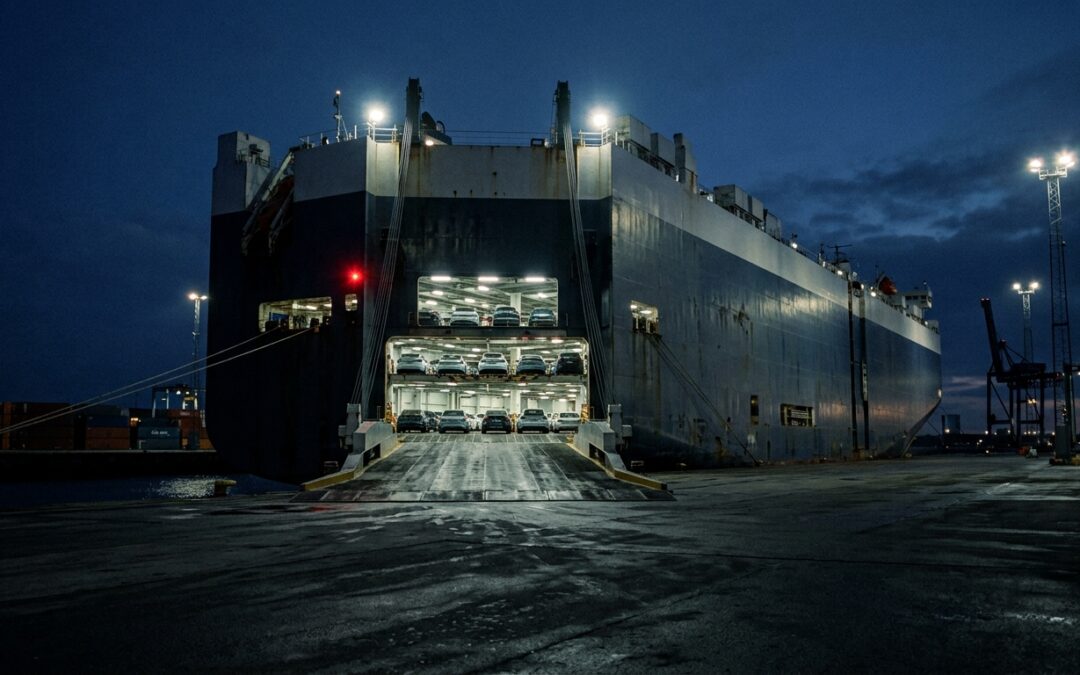
You are planning your first shipment of electric vehicle (EV) parts into the Middle East and North Africa (MENA) region, and the component that shapes every decision is the battery. Shipped on its own, a lithium-ion battery is Class 9 dangerous goods (DG): that one fact changes the transport mode, the packaging, the documents, and who is legally allowed to handle it. Electric vehicle logistics, in the cargo sense this guide uses, is largely about planning around it.
How EVs and EV Parts Are Transported
Most international EV parts shipments into MENA combine modes. The right mix depends on value, volume, urgency, and whether the shipment contains lithium batteries.
| Mode | Best For | Transit (US/EU to MENA) | Notes |
|---|---|---|---|
| Sea, container | High-value parts, large volumes | 18 to 35 days | Stronger protection for components |
| Sea, RoRo | Driveable whole units | 18 to 35 days | Roll-on/Roll-off; quick load and unload |
| Air | Time-critical, high-value, pre-launch stock | 3 to 7 days | Costlier; lithium content falls under the IATA DGR |
| Road (in-region) | Final delivery from the port | Varies | To dealerships and service centers across the region |
Most parts shipments are multimodal: sea freight from origin plus road delivery from the port. See GCE’s shipping methods compared and car shipping services.
Lithium Battery Rules and Why They Matter
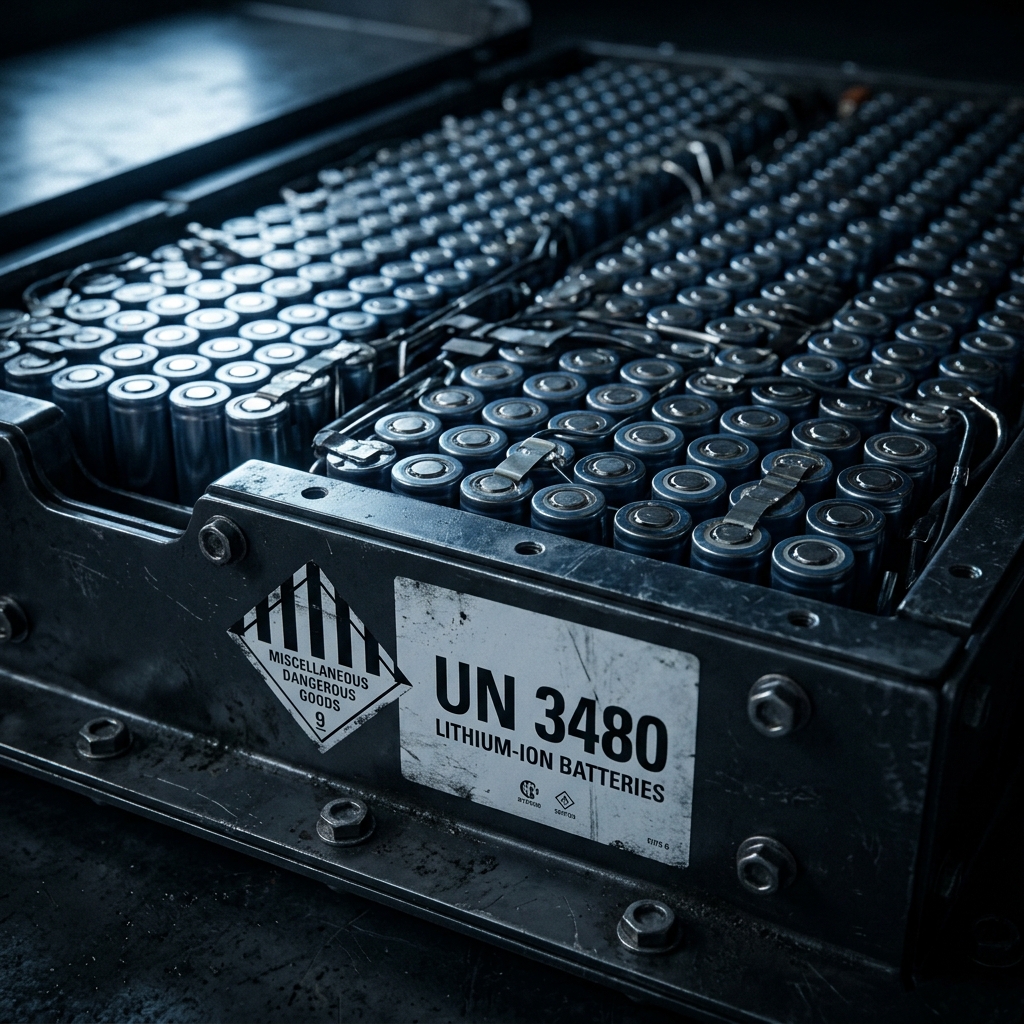
The single biggest regulatory consideration in EV logistics is lithium battery handling. Shipped separately from a vehicle, lithium-ion batteries are Class 9 dangerous goods, which changes packaging, documentation, labeling, and who is allowed to handle them.
| Reference | What It Covers | Key Point |
|---|---|---|
| UN 3480 | Lithium-ion batteries shipped alone (cells or packs) | Class 9 dangerous goods |
| UN 3481 | Batteries packed with or inside equipment | Class 9; some packaging and quantity exemptions |
| IATA DGR | Air transport of lithium batteries | Updated yearly; stricter than sea on quantity, charge, packaging |
| IMDG Code | Ocean transport (Intl Maritime Dangerous Goods Code) | Applied per port, with country overlays |
| DOT Special Provision 961 | Intact EVs, batteries installed (US surface transport) | Not DG under US rules when conditions met; parallels vary by country |
Note:
Battery shipments need dangerous-goods-certified handlers and DG-trained packing. GCE coordinates with DG-certified partners where battery transport is in scope. Full battery DG handling is a specialist service, not something performed in-house. Documentation sits at the center of any DG move, so get it right early (see key freight documents explained).
MENA Import Considerations for EV Parts
Importing EV parts into MENA introduces regional rules that do not exist in North American or European markets. Plan around four considerations.
- GSO technical regulations. The Gulf Standardization Organization (GSO) sets specifications for vehicle and component imports into Gulf Cooperation Council (GCC) member states (UAE, Saudi Arabia, Kuwait, Bahrain, Qatar, Oman). Many categories require G Mark conformity.
- National standards bodies. ESMA (Emirates Authority for Standardization and Metrology, UAE) and SASO (Saudi Standards, Metrology and Quality Organization) overlay GSO rules. SASO’s SABER platform handles Saudi product registration.
- Importer of Record. Foreign sellers without a local entity typically need a Non-Resident Importer of Record arrangement, used in the UAE, Saudi Arabia, Jordan, Kuwait, and most regional markets. See GCE’s MENA IOR services and IOR services in the UAE.
- HS code classification. EV components span several Harmonized System (HS) chapters: 84 (motors), 85 (batteries and electrical equipment), 87 (vehicle parts). Misclassification creates duty exposure and customs delay risk (see HS code classification).
How GCE Supports First MENA EV Parts Shipments
GCE Logistics has not built a separate EV practice. What we operate that is relevant to a first MENA shipment sits across three areas
- International freight forwarding to MENA: We coordinate sea, air, and multimodal shipments to the UAE, Saudi Arabia, Jordan, Kuwait, Qatar, Bahrain, Oman, and Lebanon, drawing on our international freight forwarding service‘s automotive logistics experience on these routes.
- Customs clearance and IOR/EOR: We act as Importer of Record or Exporter of Record for foreign sellers without a local entity in the destination country, handling regional documentation through our customs clearance services
- Coordination with DG-certified partners: For shipments containing lithium battery components that require Class 9 dangerous goods handling, we work with DG-certified specialists rather than handling them in-house.
End-to-End EV Shipping Support
Planning a first EV parts shipment into the MENA region involves a stack of decisions: mode, classification, customs, IOR, and partner selection. To talk through the international freight forwarding, customs, and IOR layer for your specific shipment, get in touch.
Frequently Asked Questions
Are EV batteries classified as dangerous goods?
Yes, when shipped separately from a vehicle. Lithium-ion batteries shipped alone fall under UN 3480, and batteries packed with or installed in equipment fall under UN 3481; both are Class 9 dangerous goods. Intact EVs with batteries installed and meeting set conditions can be exempt under rules like DOT Special Provision 961 in the US, though international rules vary.
Can EV batteries be shipped by air?
Yes, but under stricter rules than sea freight. The IATA Dangerous Goods Regulations govern air shipments of lithium-ion batteries and are typically more restrictive on quantity, state of charge, and packaging. Air shipping makes sense for time-critical, low-volume component shipments rather than routine inventory.
What standards apply to EV parts entering the GCC?
The Gulf Standardization Organization (GSO) sets technical regulations across GCC member states, with national overlays from ESMA in the UAE and SASO in Saudi Arabia. Many product categories require G Mark conformity, and Saudi imports usually require registration through the SABER platform.
Do I need a customs broker or an IOR for a MENA EV parts shipment?
Foreign sellers without a local entity in the destination country typically need a Non-Resident Importer of Record arrangement, which applies in the UAE, Saudi Arabia, Jordan, Kuwait, and most regional markets. A customs broker handles the entry filing; an Importer of Record holds legal responsibility for the import.
How long does sea freight to MENA usually take?
From the US East Coast or Europe to major MENA ports, sea freight typically runs 18 to 35 days in transit, plus customs clearance and final delivery. Air freight runs 3 to 7 days. Actual timing depends on the lane, port congestion, and shipment specifics.
Does GCE handle lithium battery dangerous goods directly?
GCE coordinates international freight forwarding and customs/IOR services. For shipments containing lithium battery components that require Class 9 dangerous goods handling, GCE works with DG-certified handlers and accredited specialists rather than performing that handling in-house.