

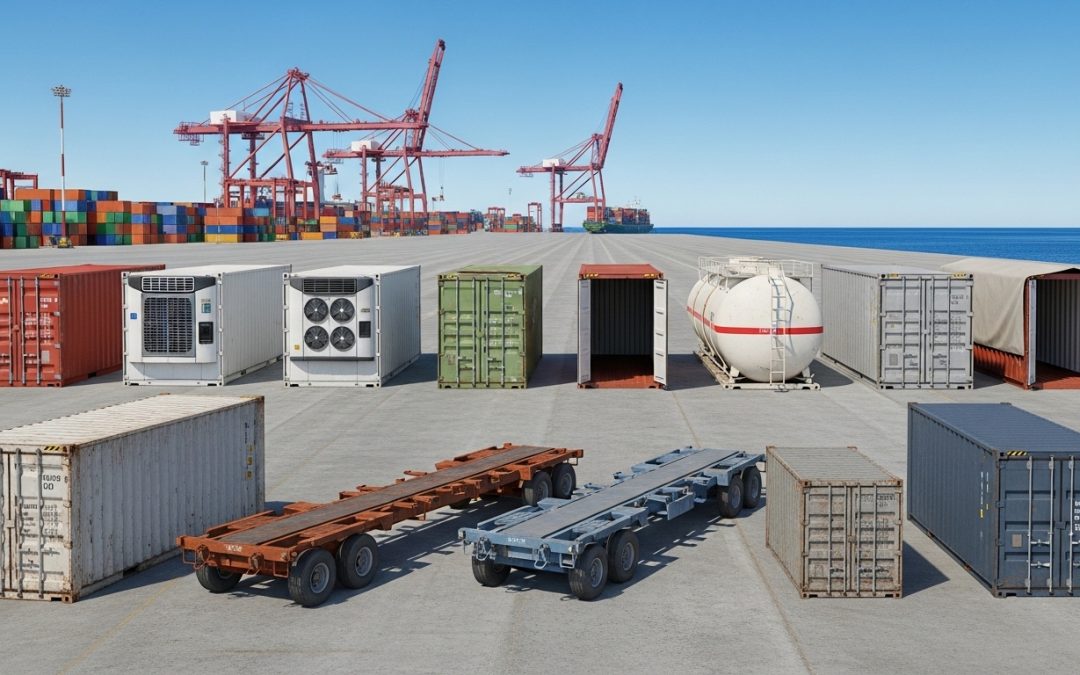
Not every shipment fits into a standard container, and in global logistics, that detail matters more than many businesses expect. Cargo can vary widely in size, weight, sensitivity, and handling requirements, and each of these factors directly influences which container should be used. When the wrong container is selected, the result is often delays at loading points, inefficient use of space, additional handling costs, or even cargo damage during transit.
To handle these differences, the shipping industry uses a range of container types, each designed for specific cargo conditions and transport needs. From standard dry containers used in everyday trade to refrigerated units, flat racks, and special equipment for oversized or temperature-sensitive goods, container choice plays a critical role in how smoothly a shipment moves from origin to destination. Understanding these options helps shippers plan more effectively, reduce operational risk, and ensure cargo moves efficiently across international trade routes.
What Are Shipping Containers?
Shipping containers are standardized steel units used to transport goods by sea, road, and rail. Because they follow standards set by the International Organization for Standardization (ISO), containers can move smoothly between different transport modes worldwide.
In simple terms, they are designed to be:
- Strong enough for long-distance transport
- Easy to handle, stack, and transfer
- Compatible with global shipping infrastructure
Why There Are Different Types of Containers
Cargo varies widely. Some shipments are heavy, others oversized, and some require strict temperature control. That’s why different container types exist.
The most common factors influencing container choice include:
- Cargo weight and dimensions
- Sensitivity to temperature or moisture
- Loading method (front, side, or top loading)
- Handling and compliance requirements
Main Types of Shipping Containers
Dry (General Purpose) Containers
Dry containers are the most widely used in global trade. They are fully enclosed and suitable for most general cargo, such as cartons, pallets, electronics, and machinery. Standard sizes include 20’ and 40’.
High Cube Containers
High cube containers offer extra internal height compared to standard dry containers. This makes them a practical choice for lightweight or bulky cargo that needs additional vertical space.
Reefer (Refrigerated) Containers
Reefer containers maintain controlled temperatures throughout transit. They are commonly used for:
- Food and beverages
- Pharmaceuticals
- Temperature-sensitive chemicals
They are designed to preserve cargo condition rather than cool goods after loading.
Open Top Containers
Open-top containers are used when cargo is too tall to be loaded through standard doors. Their removable roof allows crane loading from above, making them ideal for over-height items.
Flat Rack Containers
Flat racks are built for oversized or heavy cargo that does not fit inside enclosed containers. They are commonly used for industrial equipment, vehicles, and project cargo that requires special securing.
Tank Containers
Tank containers are designed for transporting liquids and gases under controlled conditions. They are typically used for chemicals, fuels, and food-grade liquids and require strict safety handling.
Special and Custom Containers
Some shipments require non-standard solutions. Special or custom containers are often used for project cargo, energy equipment, or goods with unique dimensional requirements.
Shipping Container Sizes & Dimensions (Overview)
While exact dimensions vary by manufacturer, most containers fall into standardized size categories.
| Container Type | Common Sizes | Typical Use |
| Dry Container | 20’, 40’, 40’ HC | General cargo |
| High Cube | 40’ HC | Voluminous cargo |
| Reefer | 20’, 40’ | Temperature-sensitive goods |
| Open Top | 20’, 40’ | Over-height cargo |
| Flat Rack | 20’, 40’ | Oversized/heavy cargo |
| Tank | 20’ | Liquids and gases |
Note: Payload limits and internal dimensions vary by carrier and equipment model.
How to Choose the Right Container
Choosing the right container starts with understanding the cargo itself. The physical characteristics of the shipment, how it will be handled, and where it is going all play a role in determining the most suitable container type.
Key factors to consider include:
- Size, weight, and shape of the cargo
- Sensitivity to temperature, moisture, or handling
- Loading and unloading method, such as forklift, crane, or side access
- Transport route and compliance requirements, especially for cross-border shipments
For oversized, temperature-sensitive, or regulated cargo, working with a freight forwarding expert helps ensure the container selection meets both operational needs and regulatory standards.
EU & Middle East Container Usage
Container usage patterns vary by region and trade lane. Understanding these differences helps shippers plan equipment more effectively.
In Europe, containers are commonly used in intermodal movements, particularly road–rail transport, where efficiency and flexibility are key. Standard dry containers and high cubes are widely used, alongside region-specific solutions such as swap bodies.
In the Middle East, demand for reefer containers is strong due to food and pharmaceutical imports. At the same time, flat racks and open top containers are frequently used for infrastructure, construction, and energy projects that involve oversized or heavy cargo.
Common Mistakes to Avoid
Many container-related issues result from simple planning oversights rather than complex problems.
Common mistakes include:
- Selecting a container based only on volume instead of weight and handling needs
- Overlooking loading and unloading constraints
- Assuming all containers of the same type have identical dimensions or limits
Final Thoughts
Shipping containers are more than transport units—they are a key part of the logistics strategy. Understanding the differences between container types helps reduce risk, improve efficiency, and avoid avoidable disruptions.
When container choice is unclear, consulting an experienced freight forwarding partner ensures the right equipment is selected before cargo begins its journey.
FAQs
What is the difference between a 40’ container and a 40’ high cube container?
A 40-foot high cube container is similar in length to a standard 40-foot container but provides extra internal height. This makes it better suited for lightweight or bulky cargo that requires additional vertical space.
When should I use a flat rack or an open top container?
Flat rack and open top containers are used when cargo is oversized, over-height, or difficult to load through standard container doors. They are commonly chosen for heavy machinery, industrial equipment, and project cargo.
Are reefer containers only used for food shipments?
No. While reefers are commonly used for food and beverages, they are also widely used for pharmaceuticals, chemicals, and other goods that require temperature-controlled transport.
Do container sizes and capacities vary by carrier?
Yes. While containers follow international standards, internal dimensions and payload limits can vary slightly depending on the manufacturer, carrier, and equipment type. It is always recommended to confirm specifications before shipping.
Recent Comments