

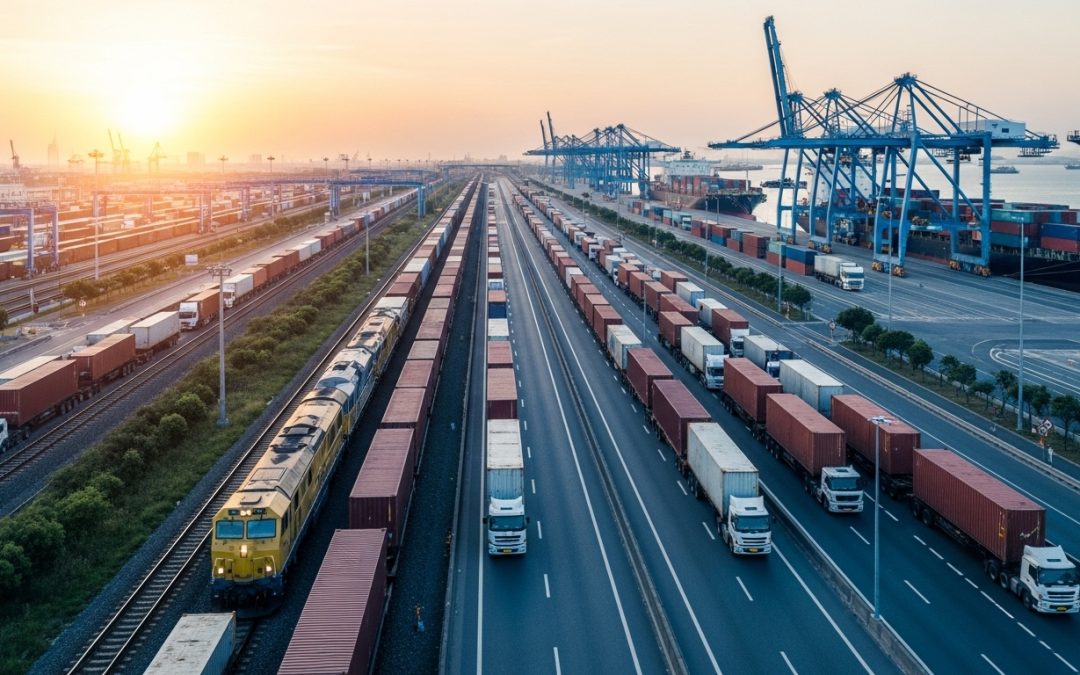
In logistics, most issues don’t come from the transport mode itself. They come from handover points when a container moves from truck to rail, rail to port, or port back to road.
Intermodal transport is designed to limit what can go wrong at those moments.
It moves freight using more than one transport mode while keeping the cargo in the same container throughout the journey. The container changes vehicles, but the cargo stays sealed, which reduces handling, lowers risk, and helps control costs on long-distance routes.
For many shippers, intermodal transport isn’t about complexity. It’s about keeping cargo untouched while using the most practical networks available.
Intermodal Transport Meaning
In practical terms, intermodal transport is defined by how the cargo is handled during the journey.
The key point is simple: the cargo stays inside the same container or load unit as it moves between different transport modes. When a container transfers from truck to rail or from rail to vessel, it is lifted and repositioned — not opened, unpacked, or reloaded.
In day-to-day operations, intermodal transport usually involves:
- Two or more transport modes
- One container or load unit for the full journey
- Different carriers handling different legs
How Intermodal Transport Works
Intermodal transport follows a fairly standard operational flow that most logistics teams are familiar with:
- First-mile pickup
The container is collected by truck from the shipper’s site and delivered to a port, rail terminal, or airport. - Long-haul movement
The container travels by rail, sea, or air for the main part of the route. - Transfers without unloading
At each terminal, the container is transferred between modes mechanically, without opening or repacking the cargo. - Last-mile delivery
A truck delivers the container to the final destination.
Benefits of Intermodal Transport
From an operational point of view, the benefits of intermodal transport are straightforward.
- Reduced cargo handling
Fewer touchpoints lower the risk of damage, theft, or inspection delays. - Cost efficiency over long distances
Rail and ocean transport are generally more economical than road-only movement. - Access to wider networks
Ports, rail hubs, and inland terminals extend reach beyond standard trucking routes. - Routing flexibility
Shippers can choose carriers and modes based on cost, capacity, or availability. - Potential environmental benefits
Rail and sea typically generate lower emissions than road transport, depending on the route.
Examples of Intermodal Shipping
Intermodal transport is used across many industries and trade lanes where cargo needs to move efficiently over long distances with minimal handling.
International import distribution
A container arrives by ocean vessel at a seaport, transfers to rail for inland movement, and is delivered by truck to a distribution center. The cargo remains sealed throughout, reducing handling risk while benefiting from rail cost efficiency.
Domestic long-haul freight
Goods are collected by truck, moved long distances by rail, and delivered by truck to the final destination. This model is commonly used for high-volume domestic shipments where road-only transport would be less economical.
Air cargo with inland delivery
Cargo arrives by air at a regional hub and is delivered by truck to nearby markets without breaking down the load unit. This approach balances speed for the main leg with efficient road distribution at the destination.
Intermodal Transport in the EU & Middle East
In the EU, intermodal transport is supported by strong port, rail, and road networks that allow efficient inland distribution from major gateways.
In the Middle East, intermodal transport often combines large gateway ports with road-based regional distribution, while rail infrastructure continues to expand along selected corridors.
In both regions, smooth terminal operations and accurate freight documentation handling are key to keeping intermodal shipments on schedule.
When Intermodal Makes Sense
Intermodal transport is best suited for shipments where cost efficiency matters more than speed, especially on long-distance routes supported by reliable rail and port infrastructure.
A short freight consultation with an expert can help confirm whether intermodal is the right routing choice for your cargo and budget.
For cargo that does not require constant intervention or tight delivery windows, intermodal offers a practical balance between flexibility and cost control. Evaluating route complexity, cargo sensitivity, and internal resources helps determine fit.
FAQs
Is intermodal transport cheaper than trucking only?
For long-distance routes, intermodal can often reduce overall transport costs, particularly when rail is used for the main leg. However, savings depend on factors such as route design, shipment volume, fuel prices, and terminal access. For shorter or time-critical routes, trucking may remain more cost-effective.
Is intermodal shipping slower than other options?
Intermodal transport may add time at transfer points, but on long-haul routes, it often delivers more consistent and predictable transit times, especially where rail networks are reliable. For urgent shipments with tight delivery windows, direct trucking or air freight may be more suitable.
What types of cargo work best for intermodal transport?
Intermodal is best suited for containerized cargo that does not require frequent handling or constant monitoring. Common examples include retail goods, consumer products, industrial materials, and manufacturing inputs with stable delivery requirements.
Recent Comments