

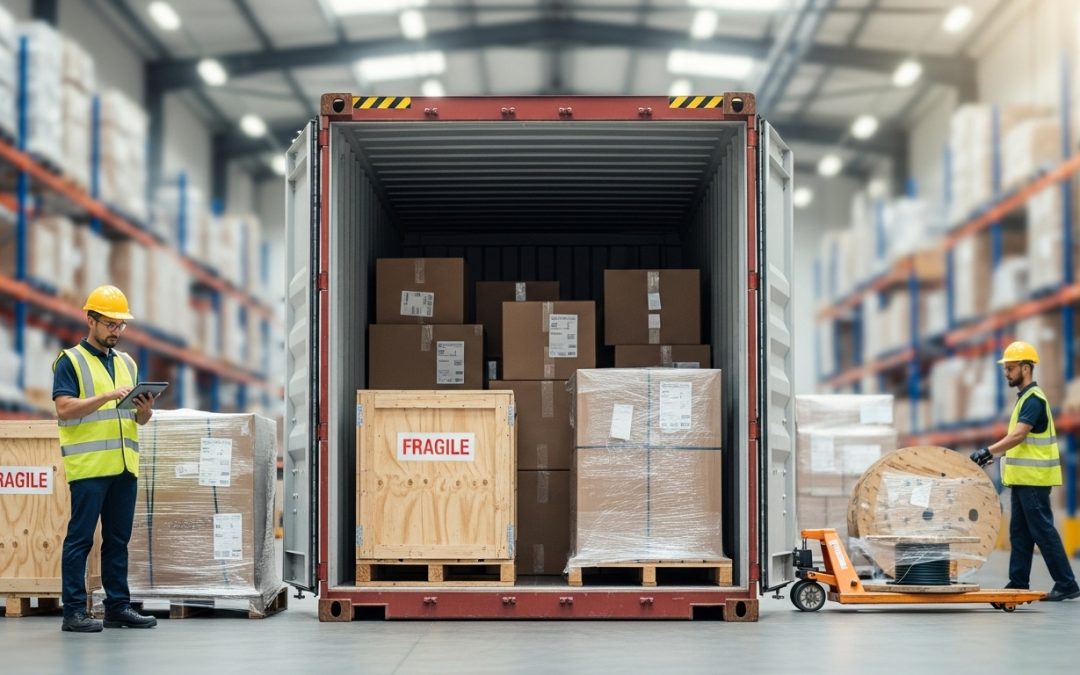
Not every international shipment is large enough to justify booking a full container. For smaller volumes, LCL (Less-Than-Container Load) offers a practical alternative—allowing businesses to ship goods efficiently without paying for unused container space.
This guide explains what LCL means in shipping, how the process works step by step, how pricing is calculated, expected transit times, and—most importantly—when LCL is the right choice and when it isn’t.
What Does LCL Mean in Shipping?
LCL stands for Less-Than-Container Load.
It refers to an ocean freight method where multiple shippers share space inside one container. Each shipper pays only for the volume their cargo occupies, rather than the cost of an entire container.
Key terms to understand:
- CBM (Cubic Meter): The unit used to calculate shipment volume
- CFS (Container Freight Station): Facilities where cargo is consolidated and deconsolidated
- House Bill of Lading (HBL): Issued to each shipper for their portion of the container
- Groupage: Another commonly used term for LCL shipping
When Should You Choose LCL Shipping?
Before looking at pricing or transit times, the first step is deciding whether LCL fits your shipment profile.
LCL is usually the right option when:
- Your shipment volume is too small to justify a full container
- You want to avoid paying for unused container space
- Delivery timelines are flexible rather than fixed
- You are shipping pilot orders, samples, or test volumes
- Your shipping volumes fluctuate throughout the year
How LCL Shipping Works (Step by Step)
LCL shipping allows multiple small shipments to share one container, while each shipment remains separately documented and traceable.
1. Pickup & Delivery to Origin CFS
The process starts with collecting the cargo and delivering it to a Container Freight Station (CFS). Here, shipments are checked, measured, labeled, and prepared to move with other cargo.
2. Consolidation with Other Shipments
Once at the CFS, shipments heading to the same destination are grouped into one container.
Each shipment keeps its own house bill of lading, even as space is shared. This consolidation reduces cost, but it may add waiting time before sailing.
3. Ocean Transport
After consolidation, the container is loaded onto a scheduled vessel. From this point, the shipment moves by sea as part of a single container.
4. Deconsolidation at Destination CFS
Upon arrival, the container is unpacked at the destination CFS, and shipments are separated again. This extra handling step is one reason LCL transit times are longer than FCL.
5. Final Delivery to Consignee
Once cleared and released, each shipment is delivered to its final destination. Delivery timing depends on local procedures and last-mile coordination.
LCL vs FCL: What’s the Difference?
Choosing between LCL and FCL depends on how much cargo you’re shipping, how quickly it needs to arrive, and how much control you need over handling and costs. The table below highlights the practical differences between the two options.
| Factor | LCL (Less-Than-Container Load) | FCL (Full Container Load) |
| Container usage | Shared with other shippers | Used by one shipper only |
| Pricing model | Charged per CBM or weight (W/M) plus handling fees | Flat rate for the entire container |
| Cost efficiency | Better for small volumes | Better for larger volumes |
| Transit time | Longer due to consolidation and deconsolidation | Shorter with direct movement |
| Cargo handling | Multiple handling points | Minimal handling |
| Risk exposure | Moderate due to shared space and rehandling | Lower with exclusive use |
| Schedule reliability | Dependent on consolidation cycles | More predictable |
| Best suited for | Small, flexible, or non-urgent shipments | Large, urgent, or sensitive cargo |
Benefits of LCL Shipping
Despite longer transit times, LCL offers several advantages:
- Cost-effective for smaller shipment volumes
- No need to delay shipments until a container is full
- Lower upfront financial commitment
- Flexible solution for irregular or seasonal demand
- Enables market entry without large shipping commitments
Costs & Pricing Structure of LCL
LCL pricing can feel confusing because the cost is split across several shared services rather than one fixed container rate.
In simple terms, LCL charges are calculated using the W/M rule (Weight or Measure). This means the shipment is charged based on whichever is higher:
- Its weight (in tons), or
- Its volume (in CBM)
What You’re Typically Paying For?
Most LCL shipments include the following costs:
- Ocean freight, charged per CBM (often with a minimum of 1 CBM)
- Origin CFS charges for receiving, handling, and consolidation
- Destination CFS charges for deconsolidation and terminal handling
- Freight Documentation and admin fees
- Local delivery or last-mile transport, if required
Why Small Shipments Can Feel Expensive?
A common misunderstanding is that LCL is always cheaper than FCL. While the ocean freight portion is usually lower, handling and destination charges can make up a large part of the total cost, especially for small volumes.
Example:
A shipment of 0.7 CBM may still be billed as 1 CBM and pay the same destination handling fees as larger LCL shipments. This increases the cost per unit, even though the shipment is small.
Because of this, LCL pricing should always be reviewed as a total landed cost, not just the freight rate.
Transit Times for LCL Shipments
LCL shipments usually take longer than FCL shipments. The reason is simple: LCL involves more steps.
Where Extra Time Is Added?
Additional time can be introduced at:
- Origin, while cargo waits to be consolidated with other shipments
- Cut-off times, if consolidation misses a scheduled sailing
- Destination CFS, where cargo must be unpacked and separated
- Routing hubs, especially common on EU–Middle East lanes
What Affects LCL Transit Time?
Transit time varies based on:
- How busy the trade lane is
- How frequently LCL services sail
- Port congestion and local efficiency
- Whether the destination is a major hub or a secondary port
Risks & Challenges of LCL Shipping
LCL shipping involves more operational touchpoints than FCL, which increases certain risks.
Common challenges include:
- Additional handling, increasing the likelihood of cargo damage
- Higher exposure to delays, as one delayed shipment can affect the entire container
- Cargo damage risk, particularly without suitable packaging for mixed cargo
- Documentation complexity, involving multiple house bills and compliance checks
- Cargo compatibility issues, when shipments with different requirements share space
LCL Shipping in the EU & Middle East
LCL plays a major role in EU–Middle East trade due to strong consolidation infrastructure.
Regional characteristics include:
- Extensive EU CFS networks supporting frequent groupage services
- Middle East gateway ports acting as regional redistribution hubs
- Higher documentation intensity compared to FCL shipments
- Schedule variability tied to consolidation cycles
Choosing the Right Shipping Method
LCL is a flexible and cost-efficient shipping option when used in the right context. By understanding how it works, how it’s priced, and its limitations, businesses can make informed shipping decisions—and when LCL or FCL is the right fit, working with an experienced ocean freight partner helps ensure smooth execution from consolidation to final delivery.
FAQs
Is LCL cheaper than FCL?
LCL can be cheaper for small shipment volumes, as you only pay for the space you use. However, for larger volumes, FCL may be more cost-effective due to lower handling charges and a flat container rate. The best option depends on total landed cost, not just freight rates.
How long does LCL shipping take?
LCL shipments generally take longer than FCL shipments. This is because time is required for consolidation at origin and deconsolidation at destination. Transit time varies depending on the trade lane, sailing frequency, and port efficiency.
Is LCL safe for fragile or sensitive cargo?
LCL can be suitable for fragile cargo if it is properly packaged and labeled. However, because LCL involves additional handling and shared container space, highly fragile or high-value goods may be better suited to FCL.
What is groupage shipping?
Groupage shipping is another term for LCL shipping. It describes the process of grouping multiple smaller shipments into one container for transport to the same destination.
When should I avoid LCL shipping?
LCL may not be the best choice for shipments that are time-critical, extremely fragile, or require strict control over handling and delivery schedules. In these cases, FCL or alternative transport modes may be more appropriate.
Recent Comments