
Most logistics problems don’t happen at sea or in the air; they happen in between.
They happen at handover points: when cargo moves from truck to rail, from rail to port, from port to vessel. This is where delays start, documents go missing, and responsibility becomes unclear. Anyone who has managed international freight knows this is where shipments slip, costs creep in, and accountability gets blurred.
Multimodal transport exists to control that reality.
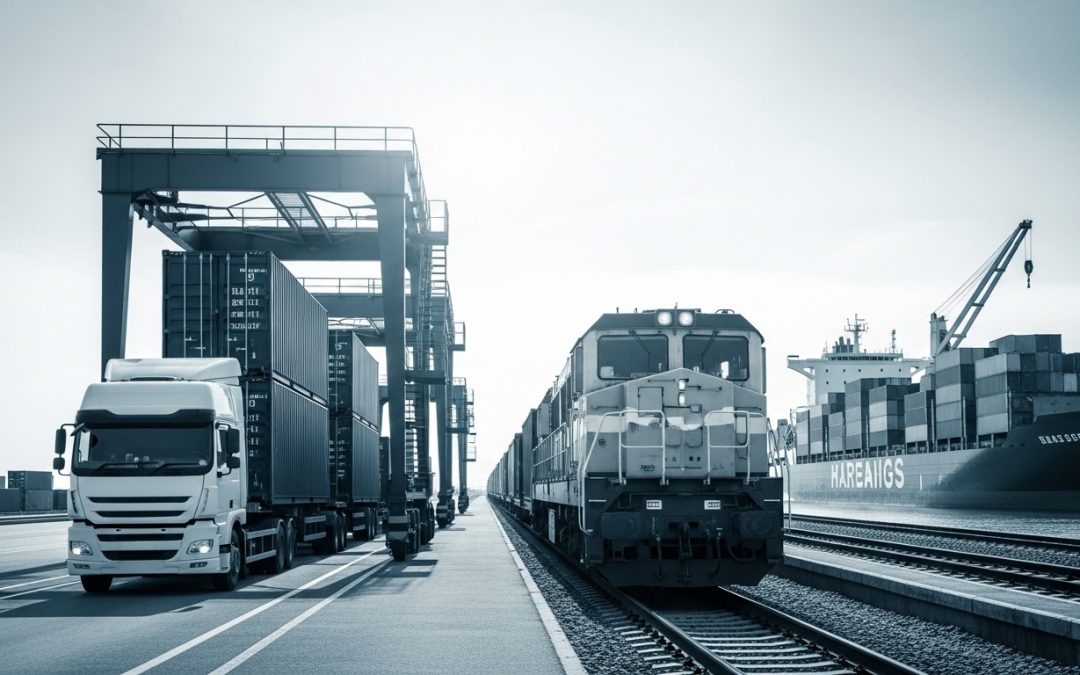
Instead of treating each transport leg as a separate transaction, multimodal transport connects multiple modes — road, rail, sea, or air — under one contract and one responsible operator. The cargo may change modes several times, but responsibility does not.
In global supply chains where complexity is unavoidable, multimodal transport is less about moving goods faster and more about reducing friction, risk, and operational noise.
What Does Multimodal Transport Mean in Logistics?
In logistics, multimodal transport means moving goods using two or more transport modes under a single contract, managed by one responsible operator.
The shipment may travel by road, rail, sea, or air, but it is treated as one continuous movement, not separate transport legs. The shipper deals with one party, and that party is accountable for coordination, documentation, and delivery across the entire journey.
What makes multimodal transport distinct is not the number of modes used, but clear responsibility at every handover point — where most delays and disputes usually occur.
How Multimodal Transport Works
From an operational perspective, multimodal transport functions as one coordinated movement, even though multiple transport modes are involved.
A typical multimodal shipment follows four core stages:
- Pickup at origin
Cargo is collected from the factory or warehouse, usually by road, and prepared for onward movement. - Transfer to the primary long-haul mode
Depending on distance, urgency, and cost, the shipment moves by rail, sea, or air. - Centralized coordination across modes
The Multimodal Transport Operator (MTO) manages carrier handovers, scheduling, and documentation to keep the flow continuous. - Final delivery to the destination.
The same operator oversees last-mile delivery to the consignee under the original contract.
Multimodal vs Intermodal Transport
Both multimodal and intermodal transport use more than one mode of transport. The real difference is how responsibility and control are handled across the journey.
| Operational Aspect | Multimodal Transport | Intermodal Transport |
| Transport contract | Single contract covering full journey | Separate contracts for each leg |
| Point of responsibility | One operator (MTO) | Shared between multiple carriers |
| Carrier coordination | Managed centrally | Managed by the shipper |
| Risk & liability | Clearly assigned to one party | Split across carriers |
| Administrative effort | Lower for the shipper | Higher for the shipper |
| Issue resolution | One point of escalation | Multiple parties involved |
Operational takeaway:
Multimodal transport reduces coordination and accountability risk, while intermodal transport offers more control over individual legs but requires greater internal management.
Main Modes Used in Multimodal Transport
Multimodal transport combines different transport modes based on distance, cargo type, urgency, and infrastructure availability.
- Road transport
Used for first-mile pickup and final delivery. - Rail transport
Applied to long-distance inland movements, particularly in regions with strong rail networks such as Europe. - Maritime transport
Forms the core of international freight, connecting global trade lanes. - Air transport
Selected for time-critical or high-value shipments where speed is essential. - Pipelines
Used in specific sectors, primarily for energy and liquid bulk cargo.
Benefits of Multimodal Transport
From an operational standpoint, the benefits of multimodal transport are practical, not theoretical.
Single point of accountability
One operator is responsible for the entire journey, simplifying claims, escalation, and issue resolution.
Simplified coordination
The shipper works with one party instead of managing multiple carriers across different modes and regions.
Improved visibility and communication
Tracking, status updates, and documentation are consolidated through a single channel.
Operational efficiency
Fewer internal handovers reduce errors, rework, and time spent resolving disruptions.
Supply chain flexibility
Routes or modes can be adjusted within the same contract when conditions change, without renegotiating responsibilities.
Challenges of Multimodal Transport
Multimodal transport offers control and clarity, but it comes with trade-offs that experienced shippers should understand.
- Dependency on one provider
Overall performance depends on the operator’s ability to coordinate carriers and manage disruptions. - Operational complexity behind the scenes
While the shipper experiences simplicity, the operator must manage multiple handovers, schedules, and systems. - Potential cost trade-offs
Multimodal transport is not always the lowest-cost option compared to highly optimized intermodal routing. - Concentrated documentation responsibility
All transport and compliance documentation flows through one operator, requiring strong internal controls.
When Should You Use Multimodal Transport?
Multimodal transport is most effective when:
- Shipments move across long international distances
- Multiple transport modes are unavoidable
- Internal logistics resources are limited
- Accountability and risk control matter more than marginal cost savings
- Delays or miscommunication would have a high commercial impact
In these scenarios, the value of centralized responsibility outweighs the flexibility of managing each transport leg separately.
Multimodal Transport in the EU & Middle East
In the EU, multimodal transport is closely linked to strong rail-to-port connectivity and cross-border standardization, where centralized coordination reduces complexity across inland and maritime legs.
In the Middle East, multimodal transport often centers on gateway ports, free zones, and long overland routes connecting regional markets.
In both regions, documentation handovers and compliance consistency represent the greatest operational risks, which is why centralized control is particularly valuable.
Role of a Multimodal Transport Operator (MTO)
The Multimodal Transport Operator is not just a coordinator. Legally and operationally, the MTO:
- Manages all carriers involved in the journey
- Oversees transport documentation and compliance
- Controls scheduling and handover points
- Assumes risk for the full transport chain
- Issues a single transport document covering the entire movement
Examples of Multimodal Transport
Multimodal transport is most effective when cargo must move across long distances, multiple regions, or different infrastructure systems under a single point of control.
Manufacturing export shipment
Cargo is collected from a factory by truck, transferred to rail for inland movement, moved by ocean vessel for the international leg, and delivered by truck to the final destination. All legs are managed under one contract, with the operator coordinating schedules, documentation, and handovers.
Time-sensitive regional distribution
High-value or urgent goods are transported by air to a regional hub, then delivered by road across borders to reach multiple destinations quickly, without splitting responsibility between carriers.
Retail and technology supply chains
Goods move by ocean to a gateway port, continue by rail to inland distribution centers, and are delivered by road to retail locations or data centers. Multimodal transport ensures consistent documentation, tracking, and accountability across each mode.
Project or infrastructure cargo
Equipment is moved from the origin by road to the port, shipped by sea, and delivered inland using a combination of rail and road. Centralized coordination reduces delays at transfer points where oversized or sensitive cargo is most at risk.
Is Multimodal Transport Right for Your Supply Chain?
Multimodal transport is not about using more transport modes — it is about managing responsibility across complex journeys.
For companies moving goods across borders and transport networks, the real question is not speed or cost alone, but whether centralized control reduces risk, delays, and operational friction across the supply chain. This is where well-structured multimodal freight solutions create operational value.
If your supply chain depends on reliability, clarity, and accountability, working with a partner that can coordinate the full journey under one contract often makes the difference. Speaking directly with a logistics expert can help determine whether a multimodal model fits your routes, cargo profile, and risk tolerance.
FAQs
Who is responsible for multimodal shipping?
The Multimodal Transport Operator (MTO) is responsible for coordination, documentation, and overall delivery, even though different carriers may handle individual legs.
Is multimodal transport cheaper than intermodal transport?
Not always. Multimodal transport prioritizes accountability and simplified management, while intermodal transport may offer lower costs when each leg is optimized separately.
What types of cargo are best suited for multimodal transport?
Multimodal transport is commonly used for containerized cargo, manufacturing goods, retail products, and high-value shipments that benefit from centralized control.
What documents are used in multimodal transport?
A single transport document typically covers the full journey, supported by standard commercial and customs documentation depending on the route.
When should a business choose multimodal transport?
When shipments involve multiple handovers, cross-border complexity, or when managing risk and accountability is more important than controlling each transport leg individually.