

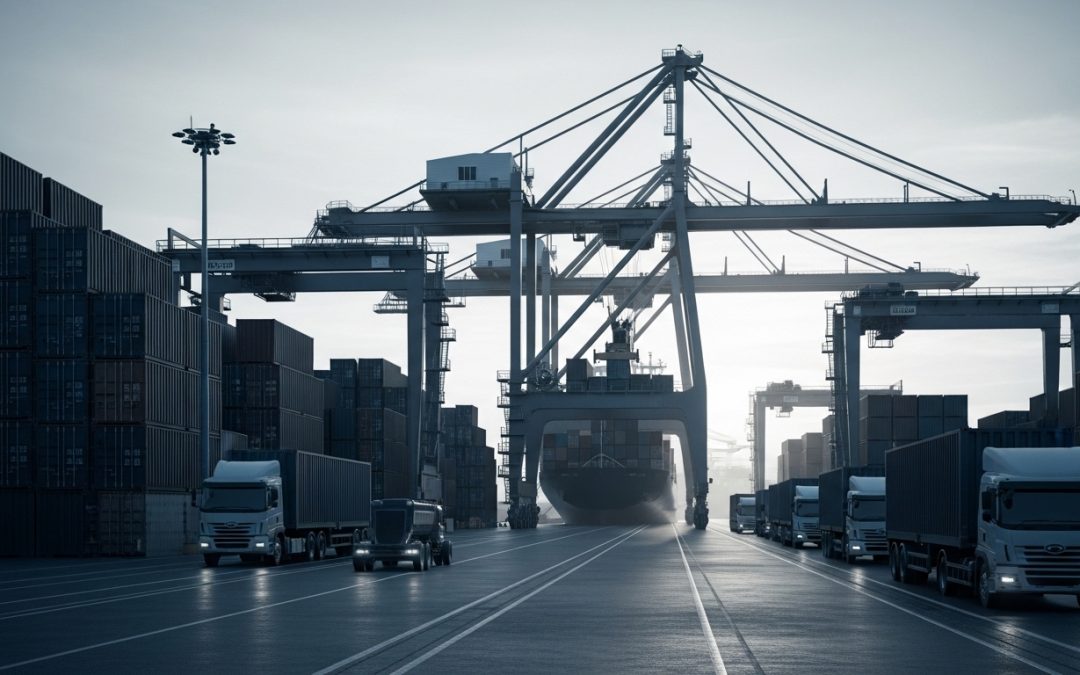
Freight shipping delays occur when cargo misses planned transit milestones due to documentation issues, capacity constraints, congestion, or external disruptions. While some delays are unavoidable, many are predictable — and preventable — with early planning and disciplined coordination.
In practice, freight delays rarely stay contained. What begins as a late pickup or a documentation query quickly turns into inventory gaps, missed production slots, contract penalties, and uncomfortable conversations with customers who planned around the original delivery date.
Most delays are not dramatic failures. They are small breakdowns that compound — a document that wasn’t reviewed as a set, a cut-off that was assumed rather than confirmed, a port that everyone thought would “be fine.”
Across air, ocean, and road freight — particularly on international and EU–Middle East routes — delays often form long before they appear in tracking systems. And predictability is what makes them avoidable.
Below is a practical, operational view of the most common freight shipping delays and what actually reduces them in real-world operations.
Why Do Freight Shipments Get Delayed?
Freight moves through a chain of handovers involving carriers, terminals, customs authorities, bonded facilities, and final-mile operators. When that chain is aligned, shipments move more or less as planned. When one element slips, delays follow.
What makes freight delays difficult to manage is that they rarely announce themselves early. A shipment can look on schedule right up until it suddenly shows as held, rolled, or pending.
In most cases, the root cause isn’t sudden. It traces back to early assumptions about documents, cut-off times, equipment availability, or how much flexibility actually exists in the route.
Delays feel sudden. In hindsight, they usually aren’t.
Which Freight Delays Can You Control — and Which Can’t?
Not all shipping delays deserve the same response. Some sit genuinely outside operational control. Others can usually be reduced with better preparation.
Delays Largely outside your control
- Severe weather events
- Labor strikes or geopolitical disruptions
- Sudden regulatory or policy changes
Delays you can usually prevent
- Documentation inconsistencies
- Missed carrier or terminal cut-offs
- Equipment or capacity shortages
- Weak coordination between parties
What Are the Most Common Causes of Freight Shipping Delays?
Documentation and Customs Delays
This remains the most frequent cause of international freight delays.
Despite common assumptions, most customs delays are not caused by inspections. They’re caused by inconsistencies — documents that technically exist but don’t align well enough to pass review.
Common issues include:
- HS code mismatches between the invoice, packing list, and declaration
- Invoice values that don’t align with Incoterms
- Packing lists that don’t reflect actual quantities or weights
- Missing permits for regulated or controlled goods
How to reduce customs and documentation delays
- Validate documents as a complete set, not individually
- Align HS classification early and avoid last-minute changes
- Pre-check permits against destination-specific rules
- Use a second reviewer before submission
Port Congestion and Terminal Constraints
Port congestion rarely appears overnight. It builds quietly.
Vessel bunching, labor shortages, limited appointment slots, and equipment imbalances all compound. When one terminal slows down, downstream connections often suffer first.
Typical drivers include:
- Seasonal volume spikes
- Limited yard or crane capacity
- Missed terminal appointments
- Chassis or container shortages
How to reduce congestion-related delays
- Book earlier during known peak seasons
- Consider alternate ports or inland routing
- Build buffer time before onward connections
- Confirm terminal appointment rules in advance
Weather-Related Freight Delays
Weather delays are often treated as unavoidable, but risk exposure varies significantly by route and season.
Certain lanes are consistently vulnerable to monsoon seasons, winter storms, and extreme heat, which affect cargo handling and equipment performance.
How to reduce weather risk
- Plan around seasonal risk windows, not just forecasts
- Allow flexible delivery windows where possible
- Use weather-appropriate packaging
- Avoid tight transshipment connections during high-risk seasons
Carrier and Equipment Availability Issues
Missed pickups and equipment problems are rarely random.
They usually stem from overbooked carriers, unconfirmed equipment, or the assumption that availability will “sort itself out.”
Common issues include:
- Container or chassis shortages
- Driver availability constraints
- Last-minute schedule changes
- Equipment not matching cargo requirements
How to reduce equipment-related delays
- Select carriers based on reliability, not just price
- Confirm equipment type and availability early
- Keep backup carrier options active
- Reconfirm before critical milestones
Peak Season, Holidays, and Cut-Off Times
Peak season freight delays are predictable — but often underplanned.
Holiday closures, reduced staffing, and compressed cut-offs add pressure to already tight schedules. Last-minute bookings almost always suffer.
How to reduce time-related delays
- Book well ahead of peak demand periods
- Add buffer days around public holidays
- Confirm terminal and carrier cut-offs clearly
- Avoid same-day tendering when capacity is tight
Packaging, Labeling, and Cargo Readiness Issues
Cargo that isn’t fully ready causes quite a few delays.
Weak packaging, unreadable labels, or missing marks often lead to re-handling, inspections, or misrouting — sometimes without immediate visibility.
How to improve cargo readiness
- Follow mode-specific packaging standards
- Use durable, legible labels
- Clearly mark the shipper and consignee details
- Photograph cargo readiness before pickup
How to Avoid Freight Shipping Delays in Practice
- Plan lead times around reality, not best-case scenarios
Transit time alone is never the full picture. Documentation review, customs clearance, port processing, and buffer windows must be planned upfront. - Validate documents as a complete set
Most delays come from small inconsistencies that are easy to fix early and difficult to unwind later. - Choose reliability over marginal cost savings
Cheaper routes often leave little room for recovery when something slips. - Use visibility with clear escalation paths
Tracking a delay doesn’t resolve it. Teams need defined intervention points. - Challenge assumptions early
Availability, cut-off flexibility, and timing should be confirmed — not assumed.
Freight Delays on EU–Middle East Routes
EU–Middle East freight faces a different risk profile. Complexity comes less from distance and more from variation.
Documentation interpretation differs by country. Terminal appointment systems are strict, and cross-border trucking adds inspection and permit dependencies.
Common pressure points include:
- Country-specific regulatory interpretation
- Strict gate and appointment systems
- Cross-border trucking inspections
- Pre-approvals for IT, telecom, and medical equipment
Quick Reference: Causes, Impact, Prevention
| Cause | Typical Impact | Preventive Action |
| Document errors | Customs holds | Pre-validation & review |
| Port congestion | Missed connections | Early booking & buffers |
| Weather exposure | Route delays | Seasonal planning |
| Equipment shortages | Pickup failure | Early confirmation |
| Peak season | Extended transit | Advance planning |
| Poor labeling | Re-handling delays | Packaging checks |
Reduce Freight Shipping Delays with Better Planning
You can’t control the weather or global disruptions. You can control preparation, communication, and decision-making.
Most freight delays don’t come from one major failure. They come from small gaps that were never addressed early enough.
Realistic planning, disciplined review, and experienced coordination reduce the likelihood of those gaps turning into costly problems.
FAQs
How can I reduce customs delays?
By aligning documents early, applying consistent HS codes, and understanding destination-specific requirements before shipping.
Are freight delivery dates guaranteed?
Generally no. Transit times are estimates, especially for international shipments with multiple handovers.
What is port congestion, and how does it affect transit time?
It occurs when terminals can’t process volume fast enough, causing vessels to wait and onward connections to be missed.
Which documents most often cause delays?
Commercial invoices, packing lists, and permits — particularly when they don’t match.
How can a freight forwarder help prevent delays?
By coordinating documentation, selecting reliable routes and carriers, monitoring milestones, and intervening early before issues escalate.